Paul Giamatti and Alexander Payne play catch up 15 years after ‘Sideways’
Paul Giamatti and Alexander Payne play catch up 15 years after ‘Sideways’
©by Leo Adam Biga
The August 25 Film Streams Feature VIII Event brought together two old collaborators and friends in actor Paul Giamatti and writer-director Alexander Payne. They worked together on Payne’s 2004 road trip romantic comedy/buddy pic “Sideways,” in which Giamatti co-starred as nebbish Miles opposite Thomas Haden Church as boorish Jack.
All of Payne’s films to date have been about the search for love. Romantic love. Platonic love. Parental love. Brotherly love. But especially self-love. In “Sideways” Giamatti plays a divorced, failed writer who believes the prospect of new love is no longer in the cards for him. His buddy Jack is a former soap star turned voice actor. The pals are getting away from it all on the eve of Jack’s impending marriage. Miles is geeked out by the wineries and vintages, Jack is obsessed with banging every woman he meets, When Jack arranges a double date with his latest conquest, Stephanie and her friend Maya, Miles is surprised and more than a little frightened to find love stirring once again as he falls head over heels for Maya. She is a reader and a wine lover who respects that he’s a writer and wine aficionado. As their fledgling relationship heats up, Miles’s friendship with Jack is severely tested by Jack’s outrageous behavior Then, when Miles is implicated in Jack’s duplicitous tracks, he finds himself on the outs with Maya. only to find redemption and courage to follow his instincts in the end.
During Feature VIII at the Holland Performing Arts Center there was much discussion by Giamatti and Payne about the wonderful scene between Miles and Maya talking about their shared love of wine and grapes when they’re really describing themselves. Giamatti refers to that scenes “as the heart of the film.” and he’s absolutely right. That scene from “Sideways” was one of a few samples of Giamatti’s work screened last night. For an actor with such a deep body of work, it’s hard to represent the breadth of the characters he’s played through a handful of clips, but his versatility shined through.
More than once last night Payne referred to Giamatti, even to his face, as “my favorite actor.” He means it, too. Their conversation was pleasant if not revealing. Payne is a great filmmaker but a rather awkward interviewer. In turn, Giamatti is not so great talking about process or method. Or at least he wasn’t last night. The highlight was his very long, involved and hilarious anecdote about prepping to play former Federal Reserve chairman Ben Bernanke in the TV movie “Too Big to Fail.” The event might have had the disadvantage of this pair actually knowing each other too well and they’re being a little too comfortable with each other and therefore somewhat uncomfortable sharing themselves with an audience. The Film Streams conversation programs would be better served with a professional moderator who knows how to effectively lead with questions and then followup or press for answers. I nominate myself for the job.
Perhaps the most impressive thing about the affair was the amount of money raised – a cool half a million dollars – in support of Film Streams, which is coming off its best year after expanding to two sites and ramping up its educational programming.
Copied below is my Reader story that appeared in advance of the Feature Event. In my phone interview with Giamatti I found him to be the same engaging, quirky guy he was at the Holland. He and Payne both indicate a strong desire to work together again and we can only hope it happens. Payne has a script and a part waiting for him when the timing’s right. Let’s hope it comes about sooner rather than later.
Look for my post of the complete Q&A I did with Giamatti in advance of the Omaha event.
Kindred spirits Giamatti and Payne to revisit the triumph of ‘Sideways’ and the art of finding truth and profundity in the holy ordinary
©by Leo Adam Biga
Originally appeared in The Reader (thereader.com)
Go-to character actor Paul Giamatti brings élan to his screen gallery of nerdy sidekicks and beleaguered Everyman types. It’s rare for someone with his hangdog looks to be a romantic interest. But in Alexander Payne’s Sideways (2004), he melts hearts with earnest desire and neurotic angst as lovelorn Miles.
He’s the sad half of a dysfunctional buddy team with Jack (Thomas Haden Church), whose frivolity masks hurt. Their on-the-road odyssey of regret, self-pity and debauchery is tempered by redeeming love. The Indiewood project surprised its makers by becoming a serious box office success and major awards contender.
Payne’s taking time from trying to get a new feature off the ground to join Giamatti for an August 25 public conversation accented by clips. This eighth iteration of the Film Streams Feature Event fundraiser unspools in the Holland Performing Arts Center at 7 p.m.
Sideways, celebrating its 15th anniversary, remains a highlight of the two men’s respective careers.
“It was a gorgeous experience,” Giamatti said by phone. “It was so much fun. It was joyous. And I think the movie feels that way because we were just making a movie for the love of making a movie – and that’s what was great about it. None of us felt we were making anything anybody would even care about that much. We cared about it. So much of that came from Alexander and his simple joy of being with actors and crew.”
By Sideways, each was a name with an identity – Giamatti’s animated sad-sack persona and Payne’s down-but-not-out milieu of misfits and searchers – that meshed well.
These cinema kindred spirits with a gift for understated wit that segues into broad comedy or high drama found themselves at parallel points in their artistic lives.
Giamatti hit his stride as a supporting player in the late-1990s. Payne made some waves with his debut feature, Citizen Ruth (1996), before fully getting on critics’ radar with Election, a 1999 cult classic enjoying retrospective adulation 20 years later. It’s the film that first brought Payne to Giamatti’s attention.
In Sideways Giamatti believably goes to the dark side of longing. Where childlike Jack is all about immediate gratification, reflective Miles broods over losses and Giamatti digs deep to mine this despair.
Giamatii and Church first met in-person on location in Santa Barbara wine country – after breaking the ice on the phone – where they had several days to bond before production began.
“I cast each independently,” Payne said. “But to have them develop some chemistry – because if no one believes the friendship between those two unlikely men then the film would not work – I had them come to location for two weeks before shooting, so we could rehearse together. But, more important, so they could hang out to play golf, see a movie, eat together. And they did.”
In the film the characters get involved with women they betray. Vain Jack, a former soap star, cheats on his bride-to-be with free-spirit Stephanie (Sandra Oh), who doesn’t know he’s engaged. Nebbish Miles, a teacher and writer reeling from a failed marriage and a book not finding a publisher, discovers in sensitive Maya (Virginia Madsen) a love he didn’t think possible anymore.
Church nails the self-absorbed miscreant Jack. Giamatti is dead-on as the yearning, naysaying Miles who wears his funk like a cloak. But, as Giamatti said, it is Miles who “opens up as a person through the movie in a really lovely, believable way.” Payne intuitively gives Giamatti the camera and the actor’s highly praised performance moves one to tears and laughter.
Giamatti’s work in Sideways established him as a character lead who can carry a film.
Producer Michael London brokered a package deal for the project. He optioned the film rights for the Rex Pickett novel. Payne and Jim Taylor wrote the script on spec. John Jackson cast for fit, not box-office .”Then,” Payne said, “we approached the studios and said. ‘Here is the screenplay, the director, the cast, and the budget – in or out?’ A couple studios said, ‘Why can’t you have bigger stars?’ Fox Searchlight rolled the dice and won.”
Giamatti is grateful Payne didn’t budge.
“He went back to the studio to tell them he wanted me and I think he anticipated he’d get a fight about that and he did get fights. But he stuck by it – me and Tom and Virginia and Sandra. These are the people he wanted.”
The ensemble made magic.
“Fifteen years later that movie is present in people’s minds as if it just came out last year,” Giamatti said. “It’s got amazing power.”
It marked a peak for Giamatti.
“I felt like if I couldn’t act again for some reason, my acting life would have been fulfilled having done this movie because it was such a purely pleasurable experience. Alexander’s a true filmmaker and that’s what makes him special.”
Payne’s admiration of Giamatti, whom he calls “my favorite actor,” runs deep.
“He’s just the perfect actor. He knows all of his dialogue backwards and forwards and can do it any which way – each take truthful, each take different. He could make bad dialogue work. When he read for me, I remember thinking he was the very first actor reading the lines almost exactly how I’d heard them in my head while writing them — and better.”
“He’s just a lovely guy and extremely well-read.”
Giamatti gushes over Payne’s directing methodology..
“He has the exceptional skill of being able to talk to each actor the way they need to be talked to,” he said. “Everybody has different needs or approaches and he is an incredibly sensitive human being to know what each person needs to get out of them what he wants.
“He’s a benevolent dictator as well. He’s in complete and utter control of everything going on, but you’d never know it he’s such a sweet and laid-back guy on the set.”
Then there’s the way Payne engages others.
“What I feel made a huge difference and sets him apart from any other director I’ve worked with,” Giamatti said, “is his choice to not use a video monitor during takes.”
Both men dislike the isolation of actors and crew working in one area while director, cinematographer and producers huddle around a video assist in another area.
Giamatti said Payne “doesn’t have a hierarchal way of thinking.” Thus, everyone’s “on the same playing field.”
“To him, everybody is important, everybody’s a part of the experience. It’s unique. But that’s him.”
It helps, Giamatti said, that Payne “likes actors.”
“I can tell you the experience of being directed by him is amazing because he’s there with you. There’s a lot of stuff where I’m alone in a room in that movie. He would stand there, watch me, and talk to me. The connection I developed with him I’ve never experienced again with a film director. As great as a lot of the people I’ve worked with are, nobody’s ever done anything like that.
“The connection you feel because of that is unbelievable. I love him, I really do.”
The actor’s eager to visit Payne’s home turf and muse.
“Indeed, yeah, I’m very curious to see Omaha and how it has informed Alexander and vice versa.”
Payne may just wing it with him here, saying, “We get along so well, I may not prepare that much. We could go out on stage and just start talking.”
Surprisingly, Sideways is the only time they’ve worked together. They nearly re-teamed in 2008 when Payne first tried setting up Downsizing. He cast Giamatti as the lead, Paul. But the free-fall economic recession put the high-concept comedy on hold. By the time Payne sought financing again the suits insisted on a marquee name to hedge their big-budget risk. Enter Matt Damon.
This Omaha reunion will not be the last time the actor and director collaborate if they have their way.
“I wish we could find an opportunity to work again,” Giamatti said.
“We definitely will,” said Payne, who has a script and part in mind for him.
“I know there is something. but I fear it may not work out. It’s all timing,” Giamatti said, sounding just like Miles.
Film Streams is screening a repertory series of Giamatti’s feature work at the Dundee Theater. On August 26 and 28 Sideways shows at the north downtown Ruth Sokolof Theater. There’s also a second repertory series of favorite Giamatti films not his own.
Visit filmstreams.org for schedules and tickets.
Read more of Leo Adam Biga’s work at leoadambiga.com.
Native Omaha Days Story Compilation
Native Omaha Days Story Compilation
Native Omaha Days has been on my writing-reporting radar for more than two decades. With the 2019 Native Omaha Days underway, I thought it a good time to compile some of my work about this communty reunion and heritage celebration. My blog, Leo Adam Biga’s My Inside Stories at leoadambiga.com, contains hundreds of stories I have written over the years about Black Omaha people, places, events and occasions. If you are a Native Omahan back for this year’s festival, then I invite you to visit the blog, poke around and enter searches to reconnect – through words, memories and photos – some of the very things you are reliving this week. You will find stories on dozens of notable Native Omahans, past and present, including Ernie Chambers, Cathy Hughes, Alfred Liggins, John Beasley, Rudy Smith, Bertha Calloway, Gene Haynes, Gabrielle Union, Yolonda Ross, Tommie Wilson, Bob Gibson, Bob Boozer, Gale Sayers, Ron Boone, Marlin Briscoe, Johnny Rodgers, Monty Ross, Charles Hall, Carol Rogers., Q Smith, Camille Metoyer Moten, Kathy Tyree, Ahman Green, Terence Crawford, Carleen Brice, Vanessa Ward, Billy Melton, Preston Love Sr.
Be sure to check out my Omaha Black Sports Legends Series: Out to Win – The Roots of Greatness.
If you like what you see, then please follow my blog as well as my companion Facebook page, My Inside Stories.
__________________________________________________________
Here is the Reader (www.thereader.com) story I did previewing Native Omaha Days 2017. From all reports, the celebration was a great success. Pam and I made it down to a few different Native Omaha Days events and we thoroughly enjoyed ourselves, too. If you’ve never been, you’ve got to sample this authentic slice of Omaha.


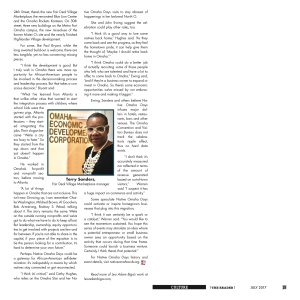
Native Omaha Days 2017: A homecoming like no other
©by Leo Adam Biga
Originally appeared in The Reader (thereader.com)
The African-American diaspora migration from the South helped populate Omaha in the 20th century. Railroad and packing house jobs were the lure. From the late 1960s on, a reverse trend has seen African-Americans leave here en mass for more progressive climes. A variant to these patterns finds thousands returning each odd-numbered August for a biennial community reunion known as Native Omaha Days.
The 21st reunion happens July 31 through August 7.
If you’ve not heard of it or partaken in it, you’re probably not black or some of your best friends are not black, because this culture-fest is in Omaha’s Afrocentric DNA. But organizers and participants emphasize everyone’s welcome to join this week-long party.
Featured events range from gospel and jazz concerts to talks and displays to a parade to a ball.
Nobody’s quite sure how many native Omahans living outside the state head home for it to rekindle relationships and visit old haunts.
There are as many takes on it as people engaging in it.
Thomas Warren, president-CEO of the Urban League of Nebraska, which this year hosts its 90 anniversary gala during Omaha Days, may put it best:
“People make it a purpose to come back.”
Reshon Dixon left Omaha for Atlanta 24 years ago and she’s been coming back ever since, except when military commitments prevented it. She hopes to free up her schedule for this year’s fest.
“I’m trying to. I usually plan a year ahead to come back.”
She said she brought her children for it when they were young because “that’s pretty much where our roots are from.” She’s delighted her now grown kids are “planning to come back this year.”
Serial nonprofit executive Viv Ewing said Omaha Days touches deep currents.
“People look at this event very fondly. In the off-year it’s not being held, people ask when is it happening again and why isn’t it every year because it’s such a great time bringing the community together with family and old friends. People look forward to it.
“There are people who have moved away who plan their vacations so that they come back to Omaha during this particular time, and that says a lot about what this event means to many people across the country.”
Even Omaha residents keep their calendars open for it.
“I’ve cut business trips as well as vacations short in order to make sure I was at home during this biennial celebration,” Warren said.
Sheila Jackson, vice president of the nonprofit that organizes it, said, “It’s one big reunion, one big family all coming together.”
Juanita Johnson, an Omaha transplant from Chicago, is impressed by the intentionality with which “people come together to embrace their commonality and their love of North Omaha.” She added, “It instills pride. It has a lot of excitement, high spirits, energy and enthusiasm.”
As president of the Long School Neighborhood Association and 24th Street Corridor Alliance, Johnson feels Omaha Days could play a greater role in community activation and empowerment.
“I think there’s an opportunity for unity to develop from it if it’s nurtured beyond just every two years.”
Empowerment Network director of operations Vicki Quaites-Ferris hopes it can contribute to a more cohesive community. “We don’t want the unity to just be for seven days. We want that to overflow so that when people leave we still feel that sense of pride coming from a community that really is seeing a rebirth.”
Ewing said even though it only happens every two years, the celebration is by now an Omaha tradition.
“It’s been around for four decades. It’s a huge thing.”
No one imagined it would endure.
“I never would have dreamt it’d be this big,” co-founder Bettie McDonald said. “I feel good knowing it got started, it’s still going and people are still excited about it.”
She said it’s little wonder though so many return given how powerful the draw of home is.
“They get emotional when they come back and see their people. It’s fun to see them greet each other. They hug and kiss and go on, hollering and screaming. It’s just a joyous thing to see.”
Dixon said even though she’s lived nearly as long in Atlanta as she did in Omaha, “I’m a Cornhusker first and a Peach second.”
Likewise for Paul Bryant, who also left Omaha for Atlanta, there’s no doubt where his allegiance lies.
“Omaha will always be home. I’m fifth generation. I’m proud of my family, I’m proud of Omaha. Native Omaha Days gives people another reason to come back.”
A little extra enticement doesn’t hurt either.
“We really plan things for them to make them want to come back home,” said McDonald. She drew from the fabled reunion her large family – the Bryant-Fishers – has held since 1917 as the model for Omaha Days. Thus, when her family convenes its centennial reunion picnic on Sunday, August 13, it will cap a week’s worth of events, including a parade and gala dinner-dance, that Omaha Days mirrors.
Bryant, a nephew of McDonald, is coming back for the family’s centennial. He’s done Omaha Days plenty of times before. He feels both Omaha Days and reunions like his family’s are ways “we pass on the legacies to the next generation.” He laments “some of the younger generations don’t understand it” and therefore “don’t respect the celebratory nature of what goes on – the passing of the torch, the knowing who-you-are, where-you-come-from. They just haven’t been taught.”
Sheila Jackson said it takes maturity to get it. “You don’t really appreciate Omaha Days until you get to be like in your 40s. That’s when you really get the hang of it. When you’re younger, it’s not a big thing to you. But when you get older. it seems to mean more.”
Sometime during the week, most celebrants end up at 24th and Lake Streets – the historic hub for the black community. There’s even a stroll down memory lane and tours. The crowd swells after hours.
“It’s almost Omaha’s equivalent of Mardi Gras, where you’ll have thousands people just converge on the intersection of 24th and Lake, with no real plans or organized activities,” Warren said. “But you know you can go to that area and see old friends, many of whom you may not have seen for several years. It gives you that real sense of community.”
Fair Deal Village Marketplace manager Terri Sanders, who said she’s bound to run into old Central High classmates, called it “a multigenerational celebration.”
Touchstone places abound, but that intersection is what Warren termed “the epicenter.”
“I’m always on 24th and Lake when I’m home,” said homegrown media mogul Cathy Hughes, who will be the grand marshall for this year’s parade. “I love standing there seeing who’s coming by and people saying, ‘Cathy, is that you?’ I always park at the Omaha Star and walk down to 24th and Lake.”
“I do end up at 24th and Lake where everybody else is,” Dixon said. “You just bump into so many people. I mean, people you went to kindergarten with. It’s so hilarious. So, yes, 24th and Lake, 24th Street period, is definitely iconic for North Omahans.”
That emerging art–culture district will be hopping between the Elks Club, Love’s Jazz & Arts Center, the Union for Contemporary Art, Omaha Rockets Kanteen, Jesse’s Place, the Fair Deal Cafe and, a bit southwest of there, the Stage II Lounge.
Omaha Days’ multi-faceted celebration is organized by the Native Omahans Club, which “promotes social and general welfare, common good, scholarships, cultural, social and recreational activities for the inner city and North Omaha community.” Omaha Days is its every-other-year vehicle for welcoming back those who left and for igniting reunions.
The week includes several big gatherings. One of the biggest, the Homecoming Parade on Saturday, August 6, on North 30th Street, will feature drill teams, floats and star entrepreneur Cathy Hughes, the founder-owner of two major networks – Radio One and TV One. She recently produced her first film, the aptly titled, Media.
Hughes is the latest in a long line of native and guest celebrities who’ve served as parade grand marshall: Terence Crawford, Dick Gregory, Gabrielle Union.
During the Days, Hughes will be honored at a Thursday, August 3 ceremony renaming a section of Paxton Blvd., where she grew up, after her. She finds it a bit surreal that signs will read Cathy Hughes Boulevard.
“I grew up in a time when black folks had to live in North Omaha. Never would I have assumed that as conservative as Omaha, Neb. is they would ever consider naming a street after a black woman who happened to grow up there. And not just a black woman, but a woman, period. When I was young. Omaha was totally male-dominated. So I’m just truly honored.”
“Omaha Days does not forget people that are from Omaha,” Reshon Dixon said. “They acknowledge them, and I think that’s great.”
During the Urban League’s Friday, August 4 gala concert featuring national recording artist Brian McKnight at the Holland Performing Arts Center, two community recognition awards will be presented. The Whitney M. Young Jr. Legacy Award will go to Omaha Economic Development Corporation president Michael Maroney. The Charles B. Washington Community Service Award will go to Empowerment Network president Willie Barney.
Maroney and Barney are key players in North Omaha redevelopment-revitalization. Warren said it’s fitting they’re being honored during Omaha Days, when so many gathering in North O will have “the opportunity to see some of those improvements.”
Quaites-Ferris said Omaha Days is a great platform.
“It’s an opportunity to celebrate North Omaha and also the people who came out of North Omaha. There are people who were born in North Omaha, grew up in North Omaha and have gone on to do some wonderful things locally and on a national level. We want to celebrate those individuals and we want to celebrate individuals who are engaged in community.
“It’s a really good time to celebrate our culture.”
“I really admire the families who are so highly accomplished but have never left, who have shared their talents and expertise with Omaha,” said Hughes. She echoes many when she expresses how much it means returning for Omaha Days.
“Every time I come, I feel renewed,” she said. “I feel the love, the kindred spirit I shared with so many of my classmates, friends, neighbors. I always leave feeling recharged. I can’t wait.”
The celebration evokes strong feelings.
“What’s most important to me about Omaha Days is reuniting with old friends, getting to see their progression in life, and getting to see my city and how it’s rebuilt and changed since I left,” Dixon said. “You do get to share with people you went to school with your success.”
“It’s a chance to catch up on what’s going in everybody’s life,” Quaites-Ferris said.
Juanita Johnson considers it. among other things,
“a networking opportunity.”
Paul Bryant likes the positive, carefree vibe. “There we are talking about old times. laughing at each other, who got fat and how many kids we have. It’s 1:30-2 o’clock in the morning in a street crowded with people.”
“By being native, many of these individuals you know your entire life, and so there’s no pretense,” Warren said.
Outside 24th and Lake, natives flock to other places special to them.
“When I come back,” Dixon said, “my major goal is to go to Joe Tess, get down to the Old Market, the zoo, go through Carter Lake and visit Salem Baptist Church, where I was raised. My absolute favorite is going to church on Sunday and seeing my Salem family.”
Some pay respects at local cemeteries. Dixon will visit Forest Lawn, where the majority of her family’s buried.
Omaha Days is also an activator for family reunions that blend right into the larger event. Yards, porches and streets are filled with people barbecuing, chilling, dancing. It’s one contiguous party.
“It’s almost like how these beach communities function, where you can just go from house to house,” Hughes said.
The Afro-centric nature of Omaha Days is undeniable. But participants want it understood it’s not exclusive.
“It just happens to be embedded in the African-American community, where it started,” Dixon said. “Anyone can come, anyone can participate. It has become a little bit of a multicultural thing – still primarily African-American.”
Some believe it needs to be a citywide event.
“It’s not like it’s part of the city,” Bryant said. “It’s like something that’s going on in North Omaha. But it’s really not city-accepted. And why not?”
Douglas Country Treasurer John Ewing agrees. “Throughout its history it’s been viewed as an African-American event when it really could be something for the whole community to embrace.”
His wife, Viv Ewing, proposes a bigger vision.
“I would like to see it grow into a citywide attraction where people from all parts come and participate the way they do for Cinco de Mayo. I’d like to see this event grow to that level of involvement from the community.”
Terri Sanders and others want to see this heritage event marketed by the city, with banners and ads, the way it does River City Roundup or the Summer Arts Festival.
“It’s not as big as the College World Seriesm but it’s significant because people return home and people return that are notable,” Sanders said.
Her daughter Symone Sanders, who rose to fame as Bernie Sanders’ press secretary during his Democratic presidential bid, may return. So may Gabrielle Union.
Vicki Quaites-Ferris sees it as an opportunity “for people who don’t live in North Omaha to come down and see and experience North Omaha.” She said, “Sometimes you only get one peripheral view of North Omaha. For me, it’s an opportunity to showcase North Omaha. Eat great food, listen to some wonderful music, have great conversation and enjoy the arts, culture, business and great things that may be overlooked.”
John Ewing values the picture if offers to native returnees.
“It’s a great opportunity for people who live in other places to come back and see some of the progress happening in their hometown.”
Recently completed and in-progress North O redevelopment will present celebrants more tangible progress than at anytime since the event’s mid-1970s start. On 24th Street. there’s the new Fair Deal Village Marketplace, the renovated Blue Lion Center and the Omaha Rockets Kanteen. On 30th, three new buildings on the Metro Fort Omaha campus, the new mixed-use of the former Mister C’s site and the nearly finished Highlander Village development.
For some, like Paul Bryant, while the long awaited build-out is welcome, there are less tangible, yet no less concerning missing pieces.
“I think the development is good. But I truly wish in Omaha there was more opportunity for African-American people to be involved in the decision-making process and leadership process. But that takes a conscious decision,” Bryant said.
“What I’ve learned from Atlanta is that unlike other cites that wanted to start the integration process with children, where school kids were the guinea pigs, Atlanta started with the professions – they started integrating the jobs. Their slogan became “We’re a city too busy to hate.” So they started from the top down
and that just doesn’t happen in Omaha.”
He worked in Omaha’s for-profit and non-profit sectors.
“A lot of things happen in Omaha that are not inclusive. This isn’t new. Growing up, I can remember Charlie Washington, Mildred Brown, Al Goodwin, Bob Armstrong, Rodney S. Wead, talking about it. The story remains the same. We’re on the outside running nonprofits and we’ve got to do what we have to do to keep afloat. But leadership, ownership, equity opportunities to get involved with projects are few and far between. If you’re not able to share in the capital, if your piece of the equation is to be the person looking for a contribution, it’s hard to determine your own future.”
Perhaps Omaha Days could be a gateway for African-American self-determination. It’s indisputably a means by which natives stay connected or get reconnected.
“I think its’ critical,” said Cathy Hughes, who relies on the Omaha Star and her Omaha Days visits to stay abreast of happenings in her beloved North O.
She and John Ewing suggest the celebration could play other roles, too.
“I think it’s a good way to lure some natives back home,” Hughes said. “As they come back and see the progress, as they feel the hometown pride, it can help give them the thought of, ‘Maybe I should retire back home in Omaha.'”
“I think Omaha could do a better job of actually recruiting some of those people who left, who are talented and have a lot to offer, to come back to Omaha,” Ewing said, “and if they’re a business owner to expand or invest in Omaha. So there’s some economic opportunities we’ve missed by not embracing it more and making it bigger.”
Ewing, Sanders and others believe Omaha Days infuses major dollars in hotels, restaurants, bars and other venues. The Omaha Convention and Visitors Bureau does not track the celebration’s ripple effect, thus no hard data exists..
“I don’t think it’s accurately measured nor reflected in terms of the amount of revenue generated based on out-of-town visitors,” Warren said. “I suspect it has a huge impact on commerce and activity.”
Some speculate Omaha Days could activate or inspire homegrown businesses that plug into this migration,
“I think it can certainly be a spark or a catalyst,” Warren said. “You would like to see the momentum sustained.
You hope this series of events may stimulate an idea where a potential entrepreneur or small business owner sees an opportunity based on the activity that occurs during that time frame. Someone could launch a business venture. Certainly, I think there’s that potential.”
For Omaha Days history and event details, visit nativeomahacub.org.
Read more of Leo Adam Biga’s work at leoadambiga.com,
__________________________________________________________
With the 2011 Native Omaha Days, July 27-August 1, just around the corner I am posting stories I’ve written about this every two years African American heritage and homecoming event and how it serves a kind of litmus test for the black community here to take stock of itself in terms of where it’s been, where it is today, and where it’s heading. The following story appeared just as the 2009 Native Omaha Days concluded. I spoke to a number of individuals for their take on the state of Black Omaha at a time when there is both much despair and much promise for the predominantly African American northeast Omaha community. I interviewed folks who grew up here and stayed here and those who left here but who retain deep ties here and come back for events like the Days in order to get a cross-section of perspectives on what the past, present, and future holds for North Omaha. This much discussed community, where generational problems of poverty and underachievement are rampant but where many success stories have also been launched, is finally getting the kind of attention it’s long required. Initiatives like the African American Empowerment Network are helping drive a planned revitalization that seems much closer to reality today than it did even two years ago. The role of Native Omaha Days shouldn’t be overlooked because it does bring together thousands of current and former Omaha residents whose individual and collective vision and energy are helping fuel what is about to be a major North Omaha revival. That doesn’t mean all the challenges that face that community will be eradicated overnight. It took decades for those problems and wounds to become embedded and it will take decades to heal them, and events like Native Omaha Days help give a purpose and focus to affecting change.
Native Omahans Take Stock of the African-American Experience in Their Hometown
©by Leo Adam Biga
Originally published in The Reader (thereader.com)
The 2009 African-American heritage celebration Native Omaha Days concluded Monday. Natives came from across America to indulge memories of this touchstone place. The biennial, week-long Days lends itself to gauging the African-American experience here — past, present, future.
Taking stock has added import with North Omaha at a tipping point. Ambitious new housing and commercial developments, job training programs, educational reform efforts and gang intervention initiatives are in the works. All in response to endemic problems of poverty and unemployment, low job readiness, poor academic performance, high dropout rates, epidemic-level STDs and ongoing drug traficking-gang violence. North O has a strong sense of identity and purpose yet struggles with scarce opportunities. The persistent challenges of segregation and inequality have led many natives over time to leave for better prospects elsewhere, but a sense of home and family keeps their ties to Omaha strong.
The Days brings thousands of natives back to meet up with friends and relatives for homecomings, large and small. Last week’s public events included: a mixer at the Native Omahans Club; a parade along North 30th Street; a dance at the Mid-America Center; appearances by NBA star Dwayne Wade and actress Gabrielle Union at North High School; and a picnic at Levi Carter Park.
Visitors helped swell the numbers at Jazz on the Green, at clubs and bars on the north side and at black church services. Celebrants were out in force too at school reunions. Then there were untold family reunions and block parties that unfolded in people’s homes and yards, in the streets, and in parks all over the city.
Northeast Omaha was jumping as visitors mixed with residents to sight-see or just kick it. Kountze Park, the Native Omahans Club, the Love’s Jazz & Arts Center, the Bryant Center, Skeets Barbecue and other haunts were popular gathering spots. Joe Tess on the south side was a popular stop. Streams of cars toured the black community’s historical corridors. Many made the rounds at post-card amenities like the riverfront, the Old Market, Lauritzen Gardend and Henry Doorly Zoo.
Nobody seems to know how many expatriates arrive for The Days. That’s a shame, as these visitors represent resources for a strapped city and state hurting from a brain drain and a small tax base. Many natives who come back are the same upwardly mobile blacks Omaha has trouble retaining, a costly decades-long trend. The city’s black population is small to begin with, so every talented native lost is felt acutely by a community with a paucity of black entrepreneurs and professionals for a city this size.
Hometown girl Felicia Webster has twice left for the East Coast but has since returned to live here with her young son. She wonders what would happen if residents collaborated with visitors on visioning new initiatives, ventures, projects, even start-up businesses aimed at reviving North Omaha.
“I feel Native Omaha Days right now is a good opportunity and a wonderful manifestation of African-American people coming together of one accord and building and talking and socializing. It would be nice to just have a really huge collective on what could actually happen with development here,” said Webster, a spoken word artist, “because, you know, people come from everywhere that are doing all kinds of things. They can bring their knowledge and tools with them to share something fresh, new and vital here. I personally would like to see that.”
Felecia Webster
What about The Days serving as a catalyst for brainstorming-networking forums that capitalize on the skill sets and entrepreneurial ideas and investment dollars of natives near and far? All geared toward building the kind of self-sufficiency that black leaders point to as the most sustainable path for black prosperity.
Nate Goldston III left Omaha as a young man and went on to found Gourmet Services in Atlanta, Ga., one of the nation’s largest food service companies. He’s doing just what Webster advocates by working with locals on stimulating new development. The self-made millionaire has been advising the Omaha Chamber of Commerce and the North Omaha Development Project on the landscape for new North O investment. He’s bullish on the prospects for that long depressed district.
“I think it’s going to grow, but you’ve got to plant the seeds first and that’s what were interested in helping do with some business development there in the food service area,” Goldston said by phone from Atlanta.
He’s close to finalizing plans for a brick-and-mortar Gourmet Services backed project here to provide entrepreneurial opportunities for local African Americans.
“If we can bring this business opportunity there and put some young people in place and let them have a little piece of the action and begin to develop a franchise type operation, and then allow them to go on and grow it themselves, manage and own at the same time, that’ll bring that missing link and fill that gap in the economic development portion. At least a small portion of it,” he said.
He said it’s the kind of grassroots development that’s required. “It’s not the Chamber’s job to develop North Omaha. North Omaha needs to be developed by people from or attached to North Omaha, and the kinds of things that need to go in need to be done from within as opposed to from without.” Goldston’s impressed with the “pro-business, pro-development, pro-North Omaha” focus of the Chamber and city. “They just need the right teammates, they need the right partners to help them do it, and that’s the first time I’ve ever noticed that collaborative attitude in Omaha. I think there’s a real chance there.”
New Omaha City Planning Director Rick Cunningham, who most recently lived on the East Coast, is a native who hopes to implement Mayor Jim Suttle’s vision for a revitalized north side. “His agenda includes a strong commitment to North Omaha,” Cunningham said of Suttle. “He has a goal for 24th and Lake Street to become a new Dundee for Omaha.”
Cunningham knows first-hand Northeast Omaha’s prolonged decline. He also knows “there have been pockets of success,” including the Blue Lion Center at 24th and Lake he served as project manager for under Omaha architect and mentor Ambrose Jackson. He said most North O redevelopment has come from “investments in new rooftops, in new housing,” and while that needs to continue he said there must be a focus on creating more employable residents and attracting businesses and services that generate new jobs and commerce. “To bring Omaha into a very livable community with an environment that all residents and visitors can enjoy we’ve got to make sure we’ve got a diverse economy.”
He looks forward to being part of solutions that “return North 24 to the vibrancy it had, when 24th and Lake was the heart and soul. We will be engaged in that effort.” He looks forward to meeting with community partners from the public and private sectors to “build synergy in accomplishing those goals.” He said the city cannot afford to let North Omaha wallow. “If there is an area that suffers in Omaha than the entire city suffers,” he said. “It’s important we revitalize the core area. Those communities that are alive and thriving have inner cities that are alive.”

Nate Goldston III
Goldston vividly recalls when North O had a greater concentration of black-owned businesses than it does today, but he said even in its heyday Omaha’s black community had few major black entrepreneurs.
“Omaha’s African-American community has always been job-oriented as opposed to entrepreneurial-oriented,” he said. “I see great opportunity and I see opportunity that’s been missed only because I don’t know that we’ve been blessed with a lot of entrepreneurs that have had the path or the ability to develop businesses in the area. We had the model of the bars, the nightclubs, the pool halls.”
He could have added restaurants, barbershops, beauty salons, clothing stores and filling stations. There were also black professionals in private practice — doctors, dentists, attorneys, accountants, pharmacists, architects.
Their example “gave me inspiration and hope,” said attorney Vaughn Chatman, a native Omahan who made it back for The Days from Calif. North 24th Street was once a thriving hub of black and white-owned businesses. Few, however, survived the ‘60s riots and their aftermath. Urban renewal did in more. Once the packing house and railroad jobs that employed many blacks vanished, few good-paying employment options surfaced. “My friends and I had no desire to leave Omaha until opportunities for us began to disappear,” said Chatman . “Most, if not all my friends, faced with lack of opportunity have left Omaha. My friends and relatives (still) there tell me the quality of life for them and their generation has not gotten any better despite the best efforts of a number of individuals and organizations.”
Several new businesses have popped up but many have come and gone over time. Despite some redevelopment North 24th is largely barren today.
“That positive feeling of inspiration and hope is what I miss the most about the North Omaha I grew up in,” said Chatman.
An old-line exception is the Omaha Star, a black weekly now 70-plus years strong. Founder Mildred Brown was one of America’s few black women publishers. She earned a national reputation for her crusading work during the civil rights movement. Goldston learned valuable lessons working for the Star as a kid.
“The Omaha Star was my entree to entrepreneurship,” he said. “That’s what taught me to create a marketing sense, the ability to be able to develop a customer base and customer service and the whole nine yards.”
Cathy Hughes is another Star veteran who credits her experience there and at Omaha black-owned radio station KOWH with helping give her the impetus to be a broadcast owner and eventually build her Radio One empire.
“It encouraged me to go ahead and to try to own my own radio station because I saw some folks in Omaha do it,” she said by phone from her Maryland home. “You lead by example. When you do something, you never know who you’re touching. you never know who you’re having an impact on. I saw Bob Gibson and Rodney Wead and Bob Boozer and Gale Sayers come together and buy a radio station, so I knew it was possible, and now I’m the largest black-owned broadcast corporation in America and the only African-American woman to head a publicly traded corporation. None of that would have been possible if I hadn’t seen the examples I saw in Omaha, if I hadn’t seen Mildred Brown keeping her newspaper not only afloat but providing her with a very comfortable existence for that day and time.”
Cathy Hughes
Hughes, like Goldston, is pleased by gains that have been made via new housing developments, streetscape improvements and the Love’s Center, but is dismayed there aren’t more Mildred Brown figures in Omaha by now. In Hughes’ estimation Omaha should be much further along than it is in black entrepreneurship.
“It has a long ways to go,” she said.
Hughes is also concerned that strong community leaders like North O developer Al Goodwin, educator Katherine Fletcher and job training director Bernice Dodd are no longer on the scene. She’s warily watching the new generation of local black leadership to assess their commitment to redevelopment.
Goldston said black businesses in Omaha are not as visible as they once were.
“Those things have all gone away,” he said, adding that Omaha “is miles apart” from the dynamic black business culture found in Atlanta. “I think other opportunities were just not there (in Omaha) at that time to start and build a business.”
All these years later, he said, few if any Omaha businesses have made the Black Enterprise 100 list of the largest African-American owned businesses.
Most black-owned Omaha businesses of any size are not located on the north side today. Out of sight, out of mind. Hard to emulate what you don’t see. “I think we flourish when we see reflections of ourselves in the community where we live,” said Webster. “And when you don’t see that, what do you have to strive for?”
Introducing students to Omaha black achievers via school curricula is something Vaughn Chatman, founder of the Omaha Black Music Hall of Fame, advocates.
Webster presents programs in schools that attempt to expand kids’ vision. “I want them to see a bigger picture, a bigger view of the world than what they normally see, and I hope that by my being African-American young boys and girls are seeing reflections of themselves in me of what they possibly could attain,” she said.
Hughes and Goldston are concerned about the education gap that finds black students on average lagging behind whites. The truancy and drop-out rates for blacks are higher. The two are alarmed by how far Omaha’s inner city schools trail their suburban counterparts. “We’re going to have to really cure that before anybody can make any progress,” said Goldston, who’s challenged a national organization he once led, 100 Black Men, with making a difference in schools.
Webster said she was fortunate to have parents who stressed education and showed her “the world was bigger than Omaha.” Omaha’s segregation meant she would often frequent places and be the only black person there. Cathy Hughes had the same experience coming of age here. “That’s challenging,” said Webster. The first time Webster left, for Philadelphia, in the early ‘90s, Omaha was viewed as a dull place by many young people — black and white.
“A lot of my close friends did end up leaving and going to more heavily populated cities, and I think a lot of that had to do with not only wanting to explore the world but what opportunities they saw. For some, it was a larger African-American presence. For others, it was bigger metropolitan areas where you felt like you were getting paid what you were worth and could fulfill what you desired.
“Coming back this time I can see Omaha is really growing but I think Omaha is still a work in progress. I have friends with degrees who are still making $12 an hour, and I think that’s a challenge. They can’t find jobs with livable wages. And I find I’m still the only person that looks like me when I go certain places.”
Webster likes that Omaha has far more going on now than even five years ago, but she said she misses Philly’s constant slate of cultural activities and larger base of African-Americans to share them with. The big city scene “reignites” her.
Author Carleen Brice (Orange Mint and Honey, Children of the Waters) is a native living in Denver, Colo. with mixed feelings about Omaha.
“It’s always complex being from a small city and having big dreams,” said Brice. “I can’t speak for others, but I felt I needed to leave Omaha to achieve what I wanted to achieve. Part of that had to do with my specific family background. When my parents divorced, we went through some bad times and so I associate Omaha with those negative memories as well as with the positive ones.
Carleen Brice
“What I sense the most in Omaha is a kind of small thinking, small dreaming. Strange since Omaha does have a lot going for it. But I also think every city is what you make of it. I live in Denver and think it’s great, but I have friends who grew up here and feel very much like it’s a tiny, backwards city. I’ve begun to think that if I moved back to Omaha I could experience it differently, without feeling so blinded by my past.”
Still, Brice said she senses North Omaha’s quality of life is worse today. “I know my grandmother is saddened by the decline of that part of the city. My friends don’t see much improvement in how people actually interact or how they are treated, which makes them feel depressed. Back to that word depressed again. It’s sad, but true, I think Omaha is depressed.”
Beaufield Berry is a playwright and actress who’s come and gone from her hometown several times. She’s here again. She feels a big part of what holds Omaha back is its “small town ideas” that don’t readily embrace diversity. She believes North Omaha will not reach its potential until the cycle of inequity and despair is broken.
“For Omaha’s black population to really thrive I think you’ve got to start at the poverty line. You have to start at where the people may not have the role models that other kids do. You have to make it so they can see a father figure or an older brother making the right decisions.”
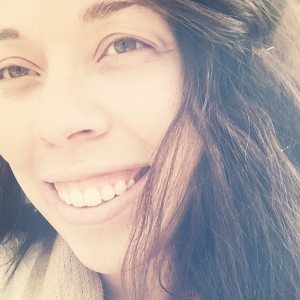
Beaufield Berry
But Berry sees much to be hopeful about, too. “On the flip side of that I see so many amazingly talented young people of all different races who are really working towards something, who can really make a difference, not only with their work but with their words, with their presence, and I want to see more of that. I think that’s how Omaha, black or white, will start to thrive citywide.”
Webster sees Omaha progressing but like many blacks she’d like to see more done.
“I think with a collective idea and voice from all kinds people that it could kind of put a faster spark into it happening. It could manifest into something where everybody that lives here really enjoys it. I think it would be amazing.”
__________________________________________________________
As the July 27-August 1 Native Omaha Days festival draws near I am posting articles I’ve written about this African-American heritage and homecoming event and about closely related topics. The following story for The Reader (www.thereader.com) appeared some years ago, at at time when predominantly African American North Omaha was experiencing a large increase in gun violence and media reports laid out the widespread poverty and achievement gaps affecting that community. In response to dire needs, the African American Empowerment Network was formed and a concerted process begun to to bring about a revitalized North Omaha. Native Omaha leaders and others expressed hope that events like Native Omaha Days and the Omaha Black Music and Community Hall of Fame might serve to unify, heal, and instill pride to help stem the tide of hopelessness and disrespect behind the violence. Things have improved recently and North O really does seen the verge of coming back, thanks in large part to efforts by the Empowerment Network, but the stabilizing role of events like Native Omaha Days shouldn’t be forgotten or dismissed.

Native Omaha Club photo by lachance (Andrew Lachance)
Native Omaha Days: A Black is Beautiful celebration, now and all the days gone by
©by Leo Adam Biga
Originally published in The Reader (thereader.com)
Organizers of the 16th biennial Native Omaha Days call it the largest gathering of African-Americans in Nebraska. That in itself makes it a significant event. Thousands fill Salem Baptist Church for the gospel fest, spill into North 24th Street for the social mixer/registration and the homecoming parade, boogie at the Qwest Center dance and chow down on soul food at a Levi Carter Lake Park picnic.
This heritage celebration held every other summer is a great big reunion with many family-class reunions around it. Parties abound. Hotels, casinos, eateries, bars fill. Jam sessions unwind. Bus tours roll. North 24th cruising commences. Stories and lies get told. It’s people of a shared roots experience coming together as one.
Unity is on the minds of natives as their community is poised at a historic juncture. Will North 24th’s heyday be recaptured through new economic-education-empowerment plans? Or will generational patterns of poverty, underemployment, single parent homes, crime and lack of opportunity continue to hold back many? What happens if the cycle of despair that grips some young lives is not broken?
“The Native Omaha homecoming is very important, but a lot of young people don’t know what it’s all about, and that really bothers me,” said Hazel Kellogg, 74, president of the sponsoring nonprofit Native Omahans Club, Inc.. “They’re the future and what we’re trying to do is make them realize how important it is to hang in with your community and to keep your community pulling together for the betterment of our people. OUR people, you know?
“We have a big problem on the north side with violence and crime and all that, and I want to reach out to young people to let them know this homecoming is all about family and friends coming home to be together and enjoy a weekend of good clean fun. Eventually the young people are going to be heading up Native Omaha Days and they need to know what it’s all about.”
She said she hopes the event is a catalyst for ongoing efforts to build up the community again. After much neglect she’s encouraged by signs of revitalization. “I’ve been through it all. I’ve been through the riots. For a long time it moved in a negative direction. Now, I’m very hopeful. We need the whole community to come together with this. Together we stand.”
Vaughn Chatman, 58, shares the same concerns. He left Omaha years ago and the problems he saw on visits from Fair Oaks, Calif., where he now lives, motivated him to found the Omaha Black Music Hall of Fame. The Hall seeks to restore the sense of community pride he knew. An induction ceremony held during the Days honors area black artists, athletes, activists, entrepreneurs and leaders. He feels young blacks can only feel invested in the future if exposed to successful folks who look like they do. He works with the Omaha Public Schools to have local black achievers discussed in classroom curricula as a way to give kids positive models to aspire to.
“Back in the day” is an oft-heard phrase of the week-long fest. Good and bad times comprise those memories. Just as World War II-era Omaha saw an influx of blacks from the South seeking packinghouse-railroad jobs, the last 40 years has seen an exodus due to meager economic-job prospects.

photo by Cyclops-Optic (Jack David Hubbell)
Centered in northeast Omaha, the black community hub became North 24th, where Jewish and black-owned businesses catered to every good and service and a vital live music scene thrived. Hence, many Days activities revolve around 24th, which declined after the late ‘60s riots. A few blocks have seen improvements, but much of this former “Street of Dreams” is run down or empty. Gang violence in the district is a problem. It’s concerns like these now spurring coalitions of residents and expatriate natives like Chatman to craft sustainable solutions.
For a change, Karen Davis sees “substance” in the new initiatives targeting rebirth. Enough to make the Native Omahans Club officer feel the area “can be back to where it was or even more. Businesses have come down or moved back, and I think it’s a good thing for us,” she said.
The Native Omahans Club is quartered in a former lounge at 3819 North 24th. During the Days the building and street outside overflow with people reminiscing. Visitors mix with residents, exchanging handshakes, hugs, laughter, tears. Scenes like this unfold all over — anywhere neighborhood-school chums or relatives catch up with each other to relive old times.
“We haven’t seen each other in years, so it’s just a fellowship — what we used to do, what we used to look like…It’s just big fun,” said Davis.
Like countless Omahans, Davis and Kellogg each have friends and family arriving for the Days. No one’s sure just how many out-of-state natives return or the economic impact of their stays, but organizers guess 5,000 to 8,000 make it in and spend millions here. Those hefty numbers lead some to say the event doesn’t get its just due from the city. No matter, it’s a family thing anyway.
“People come in from all over for Native Omaha Days. My family comes from Colorado, Minnesota. It’s a time I can get together with them. I have a friend from Arizona coming I haven’t seen in 20 years. I’ll be so glad to see her. Those are the things that really just keep my heart pumping,” Kellogg said. “It’s just a gala affair.”
For details on the Days visit www.nativeomahans.com or call 457-5974.
__________________________________________________________
Even though I grew up in North Omaha and lived there until age 43 or so, I didn’t experience my first Native Omaha Days until I had moved out of the area, and by then I was 45, and the only reason I did intersect with The Days then, and subsequently have since, is because I was reporting on it. The fact that I didn’t connect with it before is not unusual because it is essentially though by no means exclusively an African American celebration, and as you can see by my picture I am a white guy. Then there’s the fact it is a highly social affair and I am anything but social, that is unless prevailed upon to be by circumstance or assignment. But I was aware of the event, admittedly vaguely so most of my life, and I eventually did press my editors at The Reader (www.thereader.com) to let me cover it. And so over the past eight years I have filed several stories related to Native Omaha Days, most of which you can now find on this blog in the run up to this year’s festival, which is July 27-August 1. The story below is my most extensive in terms of trying to capture the spirit and the tradition of The Days, which encompasses many activities and brings back thousands of native Omahans – nobody’s really sure how many – for a week or more of catching up family, friends, old haunts.
NOTE: The parade that is a highlight of The Days was traditionally held on North 24th Street but has more recently been moved to North 30th Street, where the parade pictures below were taken by Cyclops-Optic, Jack David Hubbell.
My blog also features many other stories related to Omaha’s African American community, past and present. Check out the stories, as I’m sure you’ll find several things that interest you, just as I have in pursuing these stories the last 20 years or so.

Vera Johnson, Native Omahans Club founder, (Photo by Robyn Wisch)
Back in the Day: Native Omaha Days is reunion, homecoming, heritage celebration and party all in one
©by Leo Adam Biga
Originally published in The Reader (thereader.com)
A homecoming. That’s what Native Omaha Days, a warm, rousing, week-long black heritage reunion, means to the thousands of native sons and daughters coming back in town for this biennial summer celebration. Although the spree, which unfolded July 30 through August 4 this year, features an official itinerary of activities, including a gospel night, a drill team competition, a parade, a dance and a picnic, a far larger slate of underground doings goes on between the many family and class reunions, live concerts and parties that fill out the Days. Some revelers arrive before the merriment begins, others join the fun in progress and a few stay over well after it’s done. A revival and carnival in one, the Days is a refreshing, relaxing antidote to mainstream Omaha’s uptight ways.
North Omaha bars, clubs and restaurants bustle with the influx of out-of-towners mixing with family and old friends. North 24th Street is a river of traffic as people drive the drag to see old sites and relive old times. Neighborhoods jump to the beat of hip-hop, R&B and soul resounding from house parties and family gatherings under way. Even staid Joslyn Art Museum and its stodgy Jazz on the Green take on a new earthy, urban vibe from the added black presence. As one member of the sponsoring Native Omahans Club said of the festival, “this is our Mardi Gras.”
Shirley Stapleton-Odems is typical of those making the pilgrimage. Born and raised in Omaha — a graduate of Howard Kennedy Elementary School and Technical High School — Stapleton-Odems is a small business owner in Milwaukee who wouldn’t miss the Days for anything. “Every two years I come back…and it’s hard sometimes for me to do, but no matter what I make it happen,” she said. “I have friends who come from all over the country to this, and I see some people I haven’t seen in years. We all meet here. We’re so happy to see each other. It’s a reunion thing. It’s like no matter how long you’re gone, this is still home to us.”
As Omaha jazz-blues guru Preston Love, a former Basie sideman and Motown band leader and the author of the acclaimed book A Thousand Honey Creeks Later, observed, “Omahans are clannish” by nature. “There’s a certain kindredness. Once you’re Omaha, you’re Omaha.” Or, as David Deal, whose Skeets Ribs & Chicken has been a fixture on 24th Street since 1952, puts it, “People that moved away, they’re not out-of-towners, they’re still Omahans — they just live someplace else.” Deal sees many benefits from the summer migration. “It’s an opportunity for people to come back to see who’s still here and who’s passed on. It’s an economic boost to businesses in North Omaha.”
Homecoming returnees like Stapleton-Odems feel as if they are taking part in something unique. She said, “I don’t know of any place in the country where they have something like this where so many people over so many generations come together.” Ironically, the fest’ was inspired by long-standing Los Angeles and Chicago galas where transplanted black Nebraskans celebrate their roots. Locals who’ve attended the L.A. gig say it doesn’t compare with Omaha’s, which goes to the hilt in welcoming back natives.

Perhaps the most symbolic event of the week is the mammoth Saturday parade that courses down historic North 24th Street. It is an impressionistic scene of commerce and culture straight out of a Spike Lee film. On a hot August day, thousands of spectators line either side of the street, everyone insinuating their bodies into whatever patch of shade they can find. Hand-held fans provide the only breeze.
Vendors, selling everything from paintings to CDs to jewelry to hot foods and cold beverages to fresh fruits and vegetables, pitch their products under tents staked out in parking lots and grassy knolls. Grills and smokers work overtime, wafting the hickory-scented aroma of barbecue through the air. Interspersed at regular intervals between the caravan of decorated floats festooned with signs hawking various local car dealerships, beauty shops, fraternal associations and family trees are the funky drill teams, whose dancers shake their booties and grind their hips to the precise, rhythmic snaring of whirling dervish drummers. Paraders variously hand-out or toss everything from beads to suckers to grab-bags full of goodies.
A miked DJ “narrates” the action from an abandoned gas station, at one point mimicking the staccato sound of the drilling. A man bedecked in Civil War-era Union garb marches with a giant placard held overhead emblazoned with freedom slogans, barking into a bullhorn his diatribe against war mongers. A woman hands out spiritual messages.

Long the crux of the black community, 24th Street or “Deuce Four” as denizens know it, is where spectators not only take in the parade as it passes familiar landmarks but where they greet familiar figures with How ya’ all doin’? embraces and engage in free-flowing reminiscences about days gone by. Everywhere, a reunion of some sort unfolds around you. Love is in the air.
The parade had a celebrity this time — Omaha native actress Gabrielle Union (Deliver Us From Eva). Looking fabulous in a cap, blouse and shorts, she sat atop the back seat of a convertible sedan sponsored by her father’s family, the Abrams, whose reunion concided with the fest’. “This is just all about the people of north Omaha showing pride for the community and reaching out to each other and committing to a sense of togetherness,” said Union, also a member of the Bryant-Fisher family, which has a large stake in and presence at the Days. “It’s basically like a renewal. Each generation comes down and everyone sits around and talks. It’s like a passing of oral history, which is…a staple of our community and our culture. It’s kind of cool being part of it.”
She said being back in the hood evokes many memories. “It’s funny because I see the same faces I used to hang out with here, so a lot of mischievous memories are coming back. It’s like, Do you remember the time? So, a lot of good times. A lot of times we probably shouldn’t of been having as young kids. But basically it’s just a lot of good memories and a lot of lessons learned right here on 24th.”
The three-mile parade is aptly launched at 24th and Burdette. There, Charles Hall’s now closed Fair Deal Cafe, once called “the black city hall,” provided a forum for community leaders to debate pressing issues and to map-out social action plans. Back in the day, Hall was known to give away food during the parade, which ends at Kountze Park, long a popular gathering spot in north Omaha. Across the street is Skeets, one of many soul food eateries in the area. Just down the road a piece is the Omaha Star, where legendary publisher Mildred Brown held court from the offices of her crusading black newspaper. Across the street is the Jewell Building, where James Jewell’s Dreamland Ballroom hosted black music greats from Armstrong to Basie to Ellington to Holiday, and a little further north, at 24th and Lake, is where hep cat juke joints like the M & M Lounge and McGill’s Blue Room made hay, hosting red hot jam sessions.

Recalling when, as one brother put it, “it was real,” is part and parcel of the Days. It’s all about “remembering how 24th and Lake was…the hot spot for the black community,” said Native Omahans Club member Ann Ventry. “We had everything out here,” added NOC member Vera Johnson, who along with Bettie McDonald is credited with forming the club and originating the festival. “We had cleaners, barber shops, beauty parlors, bakeries, grocery stores, ice cream stores, restaurants, theaters, clothing stores, taxi companies, doctors’ offices. You name it, we had it. We really didn’t have to go out of the neighborhood for anything,” Johnson said. Many businesses were black-owned, too. North O was, as lifelong resident Charles Carter describes it, “it’s own entity. That was the lifestyle.”
For James Wightman, a 1973 North High and 1978 UNL grad, the homecoming is more than a chance to rejoin old friends, it’s a matter of paying homage to a legacy. “Another reason we come back and go down 24th Street is to honor where we grew up. I grew up at the Omaha Boys Club and I played ball at the Bryant Center. There was so much to do down on the north side and your parents let you walk there. Kids can’t do that anymore.” Noting its rich history of jazz and athletics, Wightman alluded to some of the notables produced by north Omaha, including major league baseball Hall of Famer Bob Gibson, Heisman winner Johnny Rodgers, jazzman Preston Love, social activist Malcolm X, actor John Beasley and Radio One founder and CEO Catherine Liggins Hughes.
For Helen McMillan Caraway, an Omaha native living in Los Angeles, sauntering down 24th Street brings back memories of the music lessons she took from Florentine Kingston, whose apartment was above a bakery on the strip. “After my music lesson I’d go downstairs and get a brownie or something,” she said. “I had to steer clear of the other side of the street, where there was a bar called McGill’s that my father, Dr. Aaron McMillan, told me, ‘Don’t go near.’” Being in Omaha again makes the Central High graduate think of “the good times we used to have at Carter Lake and all the football games. I loved that. I had a good time growing up here.”
For native Omahan Terry Goodwin Miller, now residing in Dallas, being back on 24th Street or “out on the stem,” as natives refer to it, means remembering where she and her best girlfriend from Omaha, Jonice Houston Isom, also of Dallas, got their first hair cut. It was at the old Tuxedo Barbershop, whose nattily attired proprietors, Marcus “Mac” McGee and James Bailey, ran a tight ship in the street level shop they ran in the Jewell Building, right next to a pool hall and directly below the Dreamland. Being in Omaha means stopping at favorite haunts, like Time Out Foods, Joe Tess Place and Bronco’s or having a last drink at the now closed Backstreet Lounge. It means, Goodwin Miller said, “renewing friendships…and talking about our lives and seeing family.” It means dressing to the nines and flashing bling-bling at the big dance and, when it’s over, feeling like “we don’t want to go home and grabbing something to eat and coming back to 24th Street to sit around and wait for people to come by that we know.”

Goodwin Miller said the allure of renewing Omaha relationships is so strong that despite the fact she and Houston Isom live in Dallas now, “we don’t see each other there, but when we come here we’re together the whole time.”
Skeets’ David Deal knows the territory well. From his restaurant, which serves till 2 a.m., he sees native Omahans drawn, at all hours, to their old stomping grounds. He’s no different. “We’re just coming down here to have a good time and seeing people we haven’t seen in years.” Sometimes, it’s as simple as “sitting around and watching the cars go by, just like we used to back in the good old days.”
North Omaha. More than a geographic sector, it is the traditional, cultural heart of the local black community encompassing the social-historical reality of the African-American experience. Despite four decades of federally-mandated civil rights, equal opportunity, fair housing and affirmative action measures the black community here is still a largely separate, unequal minority in both economic and political terms and suffers a lingering perception problem — born out of racism — that unfairly paints the entire near northside as a crime and poverty-ridden ghetto. Pockets of despair do exist, but in fact north Omaha is a mostly stable area undergoing regentrification. There is the 24-square block Miami Heights housing-commercial development going up between 30th and 36th Streets and Miami and Lake Streets, near the new Salem Baptist Church. There is the now under construction North Omaha Love’s Jazz, Cultural Arts and Humanities Complex, named for Preston Love, on the northwest corner of 24th and Lake. The same sense of community infusing Native Omaha Days seems to be driving this latest surge of progress, which finds black professionals like attorney Brenda Council moving back to their roots.
Former NU football player James Wightman (1975-1978) has been coming back for the Days the past eight years, first from Seattle and now L.A., and he said, “I’m pretty pleased with what’s going on now in terms of the development. When I lived here there was a stampede of everybody getting out of Omaha because there weren’t as many opportunities. I look at Omaha’s growth and I see we’re a rich, thriving community now.” During the Days he stays, as many do, with family and hooks up with ex-jocks like Dennis Forrest (Central High) and Bobby Bass (Omaha Benson) to just kick it around. “We’re spread out in different locations now but we all come back and it’s like we never missed a beat.” The idea of a black pride week generating goodwill and dollars in the black community appeals to Wightman, who said, “I came to spend my money on the north side. And I’ll be back in two years.”
Wightman feels the Days can serve as a beacon of hope to today’s disenfranchised inner city youth. “I think it sends a message to the youth that there are good things happening. That people still come back because they feel a sense of family, friendship and connection that a lot of young people don’t have today. All my friends are in town for their school-family reunions and we all love each other. There’s none of this rival Bloods-Crips stuff. We talk about making a difference. It’s not just about a party, it’s a statement that we can all get along with each other.”

“It just shows there’s a lot of good around here,” said Omaha City Councilman Frank Brown, who represents largely black District 2, “but unfortunately it’s not told by the news media.” Scanning the jam-packed parade route, a beaming Brown said, “This is a four-hour event and there’s thousands of people of all ages here and they’re smiling and enjoying themselves and there’s no problems. When you walk around you see people hugging each other. There’s tears in some of their eyes because they haven’t seen their friends, who’ve become their family.”
Family is a recurring theme of the Days. “My family all lives here.” said John Welchen, a 1973 Tech High grad now living in Inglewood, Calif. For him, the event also “means family” in the larger sense. “To me, all of the friends I grew up with and everyone I’ve become acquainted with over the years is my extended family. It’s getting a chance to just see some great friends from the past and hear a lot of old stories and enjoy a lot of laughter.”
Native Omahans living in the rush-rush-rush of impersonal big cities look forward to getting back to the slower pace and gentler ways of the Midwest. “From the time I get off the plane here I notice a difference,” said Houston Odems, who flies into Omaha from Dallas. “People are polite…kind. To me, you just can’t beat it. I tell people all the time it’s a wonderful place to have grown-up. I mean, I still know the people who sold me my first car and the people who dry-cleaned my clothes.”
Although the Days traces its start back to 1977, when the Native Omahans Club threw the first event, celebrations commemorating the ties that bind black Omahans go back well before then. As a young girl in the ‘50s, Stapleton-Odems was a majorette in an Elks drill team that strutted their stuff during 24th Street parades. “It’s a gathering that’s been gong on since I can remember,” she said.
Old-timers say the first few Native Omaha Days featured more of a 24/7, open-air, street-party atmosphere. “We were out in the middle of the street all night long just enjoying each other,” said Billy Melton, a lifelong Omahan and self-styled authority on the north side. “There was live entertainment — bands playing — every six blocks. Guys set up tents in the parks to just get with liquor. After the dances let out people would go up and down the streets till six in the morning. Everybody dressed. Everybody looking like a star. It was a party town and we knew how to party. It was something to see. No crime…nothing. Oh, yeah…there was a time when we were like that, and I’m glad to have lived in that era.”
According to Melton, an original member of the Native Omahans Club, “some people would come a week early to start bar hopping. They didn’t wait for Native Omaha Days. If certain people didn’t come here, there was no party.”
Charles Carter is no old-timer, but he recalls the stroll down memory lane that was part of past fests. “They used to have a walk with a continuous stream of people on either side of the street. What they were doing was reenacting the old days when at nighttime 24th Street was alive. There were so many people you couldn’t find a place to walk, much less park. It was unbelievable. A lot of people are like me and hold onto the thought this is the way north Omaha was at one time and it’s unfortunate our children can’t see it because there’s so much rich history there.”
Then there was the huge bash Billy Melton and his wife Martha threw at their house. “It started early in the morning and lasted all night. It was quite a thing. Music, liquor, all kinds of food. It was a big affair,” Melton said. “I had my jukebox in the backyard and we’d have dancing on the basketball court. Endless conversations. That’s what it’s all about.”
Since the emergence of gang street violence in the mid-80s, observers like Melton and Carter say the fest is more subdued, with nighttime doings confined to formal, scheduled events like the gospel night at Salem and the dance at Mancuso Hall and the 24th Street rag relegated to the North Omahans Club or other indoor venues.
A reunion ultimately means saying goodbye, hence the close of the Days is dubbed Blue Monday. Most out-of-towners have left by then, but the few stalwarts that remain mix with die-hard residents for a final round or two at various drinking holes, toasting fat times together and getting high to make the parting less painful. After a week of carousing, out-of-town revelers wear their exhaustion like a badge of honor. “You’re supposed to be tired from all this,” Houston Isom said. “There’s no such thing as sleeping during this week. I can’t even take a nap because I’ll be worried I might be missing something.” Goodwin Miller builds in recovery time, saying, “When I go home I take a day off before I go back to work.” She and the others can’t wait to do it all over again two years from now.
__________________________________________________________
One of my favorite events to write about is something called Native Omaha Days, which is really a bunch of events over the course of a week or two in mid to late summer, held every two years and in essence serving as a great big celebration of Omaha’s African American culture and heritage. There’s a public parade and picnic and a whole string of concerts, dances, and other activities, but at the root of it all is the dozens, perhaps hundreds of family and school reunions and various get togethers, large and small, that happen all over the city, but most especially in the traditional heart of the black community here – North Omaha. I’ve done a number of stories over the years about the Native Omaha Days itself or riffing off it to explore different aspects of Omaha’s black community. The story below for The Reader (www.thereader.comI is from a few years ago and focuses on one extended family’s celebration of The Days. as I like to refer to the event, via a reunion party they throw.
The Ties that Bind: One family’s celebration of Native Omaha Days
©by Leo Adam Biga
Originally published in The Reader (thereader.com)
The warm, communal homecoming known as Native Omaha Days expresses the deep ties that bind the city’s African-American community. It’s a time when natives long moved away return to roll with family and friends.
Beyond the cultural activities marking the festival, which officially concluded this week with the traditional “Blue Monday” farewells at northside watering holes, it’s an occasion when many families and high schools hold reunions. Whether visiting or residing here, it’s not unusual for someone to attend multiple public and private gatherings in the space of a week. The reunions embody the theme of reconnecting folks, separated by miles and years, that permeates The Days, whose activities began well before the prescribed Aug. 3 start and end well past the Aug. 8 close.
No singular experience can fully capture the flavor of this biennial love-in, but the Evergreen Family Reunion — a rendezvous of many families in one — comes close. Evergreen’s not the name of a people, but of the rural Alabama hamlet where families sharing a common origin/lineage, including the Nareds, Likelys, Olivers, Unions, Holts, Butlers, Turners and Ammons, can trace their roots.
For older kin reared there, Evergreen holds bitter memories as an inhospitable place for blacks. Those who got out, said Evergreen-born and Omaha-raised Richard Nared, were forced to leave. “Most of us came here because we had to,” he said. “A lot of my relatives had to leave the South in the middle of the night. I was little, but I did see some of the things we were confronted with, like the Ku Klux Klan.” The Nareds migrated north, as countless others did, to escape oppression and to find, as New York-raised Clinton Nared said, “a new freedom” and “a better life.”
Celebrating a fresh start and keeping track of an ever-expanding legacy is what compelled the family to start the reunion in the first place, said Rev. Robert Holt, who came in for the affair from California. The reunion can be traced to Moses Union and Georgia Ewing, who, in around 1928, “decided they would bring the family together so there would be no intermarriage. It started out with about 10 people and it grew. We’ve had as many as 2,000 attend. I don’t care where it is, I go.”
As Rev. Frank Likely of Gethsemane Church of God in Christ said in his invocation before the family fish fry on Friday, the reunion is, in part, a forum for discovering “family members we didn’t even know we had.” Then there’s “the chance to meet people I haven’t seen in 40 or 50 years,” said Rev. E.C. Oliver, pastor of Eden Baptist Church. “That’s what it means to me. A lot of them, I’ve wondered, ‘Were they still alive? What were they doing?’ It’s a good time for catching up and for fellowship,” said Oliver, who arrived from Evergreen without “a dime in my pocket.”
Clinton Nared‘s taken it upon himself to chart the family tree. Reunions, he said, reveal much. “Each year I come, I get more information and I meet people I never met before,” he said. “There’s so much history here.” Niece and fellow New Yorker Heather Nared said, “Every year I find out something different about the family.”
Of Richard Nared’s three daughters — Debra, Dina and Dawn — Dina’s been inspired to delve into the family’s past. “I needed to meet my people and to know our history,” she said. “I’ve been to more reunions than the rest of them. I even went to Evergreen. I thought it was beautiful. I loved the South. Before my oldest relatives died off, I got to sit and talk to them. It was fun. We had a good time.”
Over generations the family line spread, and offshoots can be found today across the U.S. and the world. But in the South, where some relatives remain, the multi-branched tree first sprouted in America. “We live all over. Now and then we come back together,” Richard Nared said. “But Evegreen’s where it all began. They used to call it Big Meeting.”
Gabrielle Union
Held variously in Detroit, Nashville, Evergreen and other locales, the reunion enjoys a run nearly rivaling that of the Bryant-Fisher clan, an old, noted area black family related by marriage to an Evergreen branch, the Unions, whose profile has increased due to the fame of one of its own, film/TV actress Gabrielle Union. A native Omahan hot off The Honeymooners remake and an Ebony cover and co-star of the upcoming ABC drama Night Stalker, she made the rounds at The Days and reunion, causing a stir wherever she went — “You seen Gabrielle? Is she here yet? We’re so proud of her.”
A display of how interconnected Omaha’s black community remains were the hundreds that greeted the star at Adams Park on Friday afternoon, when a public ceremony naming the park pond after her turned into — what else? — a reunion. Her mother, Theresa Union, said of the appreciative throng, “Most of these people, believe it or not, are her relatives, either on my side or on her father’s side. We are a very big part of North Omaha’s population.” Gabrielle’s father, Sylvester Union, said his famous daughter comes to the family galas for the same reason everyone does: “It’s a legacy we’re trying to keep going,” he said. “It’s an opportunity to communicate and share and stay in touch. To me, that’s what it’s about — bonding and rebonding.”
The actress wasn’t the only celebrity around, either. Pro football Hall of Famer Gale Sayers and Radio One founder Catherine Liggins Hughes were out and about, meeting and greeting, giving props to their hometown, family and fellow natives. This tight black community is small enough that Sayers and Hughes grew up with the Unions, the Nareds and many other families taking part. They were among a mix of current and former Omahans who gave it up for the good vibes and careers of 40 musicians inducted into the Omaha Black Music Hall of Fame at an Aug. 4 banquet. The Days is all about paying homage to Omaha’s great black heritage. As Sayers said, “People in Chicago and different places I go ask me where I’m from and when I say, ‘Omaha, Nebraska.,’ they look at me like I’m crazy. ‘You mean there’s blacks in Omaha?’ I explain how there’s a very rich tradition of African-Americans here, how we helped develop the city, how there’s a lot of talent that’s come out of here, and how proud of the fact I am to be from Omaha, Nebraska.”

Gale Sayers
This outpouring of pride and affection links not only individual families, but an entire community. “Family ties is one of the most powerful things in black history. It runs deep with us,” Richard Nared said. During The Days, everyone is a brother and a sister. “We’re all one big family,” Omahan John Butler said.
Helping host the 2005 Evergreen affair were the Nareds, whose sprawling Pee Wee’s Palace daycare at 3650 Crown Point Avenue served as the reunion registration center and fish-fry/social-mixer site. Born in Evergreen with his two brothers, William and John, Richard Nared is patriarch of a family that’s a pillar in the local black community. The Nareds were instrumental in starting the Bryant Center, once Omaha’s premier outdoor basketball facility now enjoying a revival. Richard helped form and run the Midwest Striders track club. William was a cop. John, a rec center director. Richard’s sister-in-law, Bernice Nared, is Northwest High’s principal. Daughter-in-law Sherrie Nared is Douglas County’s HIV Prevention Specialist.
The Friday fry event broke the ice with help from the jamming funk band R-Style. Some 300 souls boogied the night away. “More than we expected,” Debra Nared said. About 50 folks were still living it up on the edge of dawn. As adults conversed, danced and played cards, kids tumbled on the playground.
The family made its presence known in the Native O parade the next morning with a mini-caravan consisting of a bus and two caddies, adorned with banners flying the family colors. T-shirts proclaimed the family’s Evergreen roots. A soul-food picnic that afternoon at Fontenelle Park offered more chances for fellowship. Gabrielle and her entourage showed up to press the flesh and partake in ribs, beans, potato salad and peach cobbler. She posed for pictures with aunties, uncles, cousins. A weekend limo tour showed out-of-towners the sights. A coterie of relatives strutted their stuff at the big dance at Omaha’s Qwest Center that night. A Sunday church service and dinner at Pilgrim’s Baptist, whose founders were family members from Evergreen, brought the story full circle.
Heard repeatedly during the reunion: “Hey, cuz, how ya’ doin’?” and “You my cuz, too?” and “Is that my cuz over there?”
Annette Nared said, “There’s a lot of people here I don’t know, but by the time the night’s over, I’ll meet a whole lot of new relatives.” Looking around at all the family surrounding her, wide-eyed Dawn Nared said, “I didn’t know I had this many cousins. It’s interesting.” Omahan Sharon Turner, who married into the family, summed up the weekend by saying, it’s “lots of camaraderie. It’s a real good time to reconnect and find out what other folks are doing.”
For Richard Nared, it’s all about continuity. “Young people don’t know the family tree. They don’t know their family history unless someone old enlightens them,” he said. “Kids need to know about their history. If they don’t know their history, they’re lost anyway.”
It’s why he called out a challenge to the young bloods to keep it going. “This is a family affair,” he said. “I want the young people here to carry things on. Let’s come together. Let’s make this something special from now on.”
Kindred spirits Giamatti and Payne to revisit the triumph of ‘Sideways’ and the art of finding truth and profundity in the holy ordinary
Kindred spirits Giamatti and Payne to revisit the triumph of ‘Sideways’ and the art of finding truth and profundity in the holy ordinary
©by Leo Adam Biga
Appearing in the August 2019 edition of The Reader (thereader.com)
Go-to character actor Paul Giamatti brings élan to his screen gallery of nerdy sidekicks and beleaguered Everyman types. It’s rare for someone with his hangdog looks to be a romantic interest. But in Alexander Payne’s Sideways (2004), he melts hearts with earnest desire and neurotic angst as lovelorn Miles.
He’s the sad half of a dysfunctional buddy team with Jack (Thomas Haden Church), whose frivolity masks hurt. Their on-the-road odyssey of regret, self-pity and debauchery is tempered by redeeming love. The Indiewood project surprised its makers by becoming a serious box office success and major awards contender.
Payne’s taking time from trying to get a new feature off the ground to join Giamatti for an August 25 public conversation accented by clips. This eighth iteration of the Film Streams Feature Event fundraiser unspools in the Holland Performing Arts Center at 7 p.m.
Sideways, celebrating its 15th anniversary, remains a highlight of the two men’s respective careers.
“It was a gorgeous experience,” Giamatti said by phone. “It was so much fun. It was joyous. And I think the movie feels that way because we were just making a movie for the love of making a movie – and that’s what was great about it. None of us felt we were making anything anybody would even care about that much. We cared about it. So much of that came from Alexander and his simple joy of being with actors and crew.”
By Sideways, each was a name with an identity – Giamatti’s animated sad-sack persona and Payne’s down-but-not-out milieu of misfits and searchers – that meshed well.
These cinema kindred spirits with a gift for understated wit that segues into broad comedy or high drama found themselves at parallel points in their artistic lives.
Giamatti hit his stride as a supporting player in the late-1990s. Payne made some waves with his debut feature, Citizen Ruth (1996), before fully getting on critics’ radar with Election, a 1999 cult classic enjoying retrospective adulation 20 years later. It’s the film that first brought Payne to Giamatti’s attention.
In Sideways Giamatti believably goes to the dark side of longing. Where childlike Jack is all about immediate gratification, reflective Miles broods over losses and Giamatti digs deep to mine this despair.
Giamatii and Church first met in-person on location in Santa Barbara wine country – after breaking the ice on the phone – where they had several days to bond before production began.
“I cast each independently,” Payne said. “But to have them develop some chemistry – because if no one believes the friendship between those two unlikely men then the film would not work – I had them come to location for two weeks before shooting, so we could rehearse together. But, more important, so they could hang out to play golf, see a movie, eat together. And they did.”
In the film the characters get involved with women they betray. Vain Jack, a former soap star, cheats on his bride-to-be with free-spirit Stephanie (Sandra Oh), who doesn’t know he’s engaged. Nebbish Miles, a teacher and writer reeling from a failed marriage and a book not finding a publisher, discovers in sensitive Maya (Virginia Madsen) a love he didn’t think possible anymore.
Church nails the self-absorbed miscreant Jack. Giamatti is dead-on as the yearning, naysaying Miles who wears his funk like a cloak. But, as Giamatti said, it is Miles who “opens up as a person through the movie in a really lovely, believable way.” Payne intuitively gives Giamatti the camera and the actor’s highly praised performance moves one to tears and laughter.
Giamatti’s work in Sideways established him as a character lead who can carry a film.
Producer Michael London brokered a package deal for the project. He optioned the film rights for the Rex Pickett novel. Payne and Jim Taylor wrote the script on spec. John Jackson cast for fit, not box-office .”Then,” Payne said, “we approached the studios and said. ‘Here is the screenplay, the director, the cast, and the budget – in or out?’ A couple studios said, ‘Why can’t you have bigger stars?’ Fox Searchlight rolled the dice and won.”
Giamatti is grateful Payne didn’t budge.
“He went back to the studio to tell them he wanted me and I think he anticipated he’d get a fight about that and he did get fights. But he stuck by it – me and Tom and Virginia and Sandra. These are the people he wanted.”
The ensemble made magic.
“Fifteen years later that movie is present in people’s minds as if it just came out last year,” Giamatti said. “It’s got amazing power.”
It marked a peak for Giamatti.
“I felt like if I couldn’t act again for some reason, my acting life would have been fulfilled having done this movie because it was such a purely pleasurable experience. Alexander’s a true filmmaker and that’s what makes him special.”
Payne’s admiration of Giamatti, whom he calls “my favorite actor,” runs deep.
“He’s just the perfect actor. He knows all of his dialogue backwards and forwards and can do it any which way – each take truthful, each take different. He could make bad dialogue work. When he read for me, I remember thinking he was the very first actor reading the lines almost exactly how I’d heard them in my head while writing them — and better.”
“He’s just a lovely guy and extremely well-read.”
Giamatti gushes over Payne’s directing methodology..
“He has the exceptional skill of being able to talk to each actor the way they need to be talked to,” he said. “Everybody has different needs or approaches and he is an incredibly sensitive human being to know what each person needs to get out of them what he wants.
“He’s a benevolent dictator as well. He’s in complete and utter control of everything going on, but you’d never know it he’s such a sweet and laid-back guy on the set.”
Then there’s the way Payne engages others.
“What I feel made a huge difference and sets him apart from any other director I’ve worked with,” Giamatti said, “is his choice to not use a video monitor during takes.”
Both men dislike the isolation of actors and crew working in one area while director, cinematographer and producers huddle around a video assist in another area.
Giamatti said Payne “doesn’t have a hierarchal way of thinking.” Thus, everyone’s “on the same playing field.” “To him, everybody is important, everybody’s a part of the experience. It’s unique. But that’s him.”
It helps, Giamatti said, that Payne “likes actors.”
“I can tell you the experience of being directed by him is amazing because he’s there with you. There’s a lot of stuff where I’m alone in a room in that movie. He would stand there, watch me, and talk to me. The connection I developed with him I’ve never experienced again with a film director. As great as a lot of the people I’ve worked with are, nobody’s ever done anything like that.
“The connection you feel because of that is unbelievable. I love him, I really do.”
The actor’s eager to visit Payne’s home turf and muse.
“Indeed, yeah, I’m very curious to see Omaha and how it has informed Alexander and vice versa.”
Payne may just wing it with him here, saying, “We get along so well, I may not prepare that much. We could go out on stage and just start talking.”
Surprisingly, Sideways is the only time they’ve worked together. They nearly re-teamed in 2008 when Payne first tried setting up Downsizing. He cast Giamatti as the lead, Paul. But the free-fall economic recession put the high-concept comedy on hold. By the time Payne sought financing again the suits insisted on a marquee name to hedge their big-budget risk. Enter Matt Damon.
This Omaha reunion will not be the last time the actor and director collaborate if they have their way.
“I wish we could find an opportunity to work again,” Giamatti said.
“We definitely will,” said Payne, who has a script and part in mind for him.
“I know there is something. but I fear it may not work out. It’s all timing,” Giamatti said, sounding just like Miles.
Film Streams is screening a repertory series of Giamatti’s feature work at the Dundee Theater. On August 26 and 28 Sideways shows at the north downtown Ruth Sokolof Theater. There’s also a second repertory series of favorite Giamatti films not his own.
Visit filmstreams.org for schedules and tickets.
Read more of Leo Adam Biga’s work at leoadambiga.com.
Women still calling the shots at the Omaha Star after 81 years
Women still calling the shots at the Omaha Star after 81 years
©by Leo Adam Biga
Appearing in the August 2019 edition of The Reader (thereader.com)
Native Omaha Days is a biennial, first-week-in-August nostalgia trip for current and former residents reliving the black-is-beautiful experience of their youth. Among the many touchstones of African-American life here is the newspaper serving that community, the Omaha Star.
From its 1938 founding by Mildred Brown, the paper’s continued a legacy of black women publishers and editors. When Brown died in 1989. niece Marguertia Washington took the helm. Upon her 2016 passing, Phyllis Hicks took the reins. With Hicks retiring in early 2019, Frankie Williams has assumed interim publisher-editor roles as the paper’s come under the ownership of the Mildred D. Brown Memorial Study Center.
Brown’s matriarchal presence still looms large. The apartment-office she kept at the Star is a shrine in this National Register of Historic Places building. The loud. proud Brown was often the only woman present in the circle of power she convened there.
“She was performing in a man’s role,” Frankie Williams said,” and did it very well.”
Brown’s trademark white carnation corsage was her calling card at myriad social-community events she made it her business to attend.
Scores of youth worked for her as carriers and sales staff. She paid for many young people’s education and mentored many others.
Paul Bryant credits “Aunt Millie” with supporting him through his “starving student” days. He came to admire her social entrepreneurship.
“Mildred Brown was a fighter who used intellect, tenacity and moral authority to win. She was a visionary trailblazer decades ahead of her time.”
In 1968 Frankie Williams sold ads and edited a teen page for the Star while a Central High School. She recalls Brown holding court.
“This was a gathering place for community leaders.” Williams said of the paper’s offices. When news broke of Martin Luther King Jr.’s assassination, she witnessed a procession of leaders seek Brown out there. “It was such a solemn, somber experience, It was silence and then talking and then – where do we go from here. Mildred led the conversation. Hers was definitely a voice of reason. She was a thinker and strategist. I wouldn’t say calm, though, She was a very forceful person.”
Williams and others were on the receiving end of “tough conversations” with Brown.
“I remember the day she told me to order her carnation corsage. I decided she should have a pink one instead of the white. Well, that was something I got called back here for,” Williams said from that same back room. “She told me it wasn’t my decision to make.”
Terri Sanders, a board member of the Mildred Brown Center, grew up in awe of the regal Brown, whom she remembers as “someone to be admired that you could pattern yourself after working in the community.”
The paper’s heyday is long past as it struggles finding sustainability in this tenuous time for print media.
Williams aims to increase visibility. The paper held a July 27 gala screening of The Wiz at Bryant Park and will have a conspicuous display in the Native Omaha Days stroll and parade.
For Williams, heading up the Star is a “full-circle” event. Brown wanted Williams to one day succeed her. It was too far off and daunting a prospect for an 18-year-old to process then. After decades working in youth services in Atlanta and Omaha, Williams returned to the fold 11 years ago to assist Washington and Hicks.
“The paper started going through some really tough times. One of the staff resigned because Marguerita (Washington) just wasn’t able to make payroll,” Williams recalled. When Washington died, Hicks managed her estate. Thus, Williams assumed “more and more Star responsibilities.” Now that she’s in the post Brown groomed her for, she’s fully aware of being a steward.
“I am grateful to be here. I can’t be Mildred. nor would I try to be. The thing I can do is carry her torch and make sure the legacy lives on. I want to take care of it.”
She agrees with Terri Sanders “the paper’s in good hands” with the Study Center.
“There were a lot of people interested in purchasing it, and still are. But I’m happy it happened like this.” Williams said. “I would not have wanted it to go to someone who didn’t understand the legacy and would have no value in Mildred other than the name.”
Sanders feels the Study Center board and Star staff share a mission. “Part of our job is to reacquaint or introduce people to the Omaha Star and why it is important.”
The Study Center awards scholarships, operates the Junior Journalist Program and feeds the Star interns.
“We’ve had several interns and scholarship recipients go on to do well,” said Sanders, including, most prominently, her own daughter Symone Sanders, a national Democratic Party consultant and news panelist.
Two generations earlier, Urban One founder Cathy Hughes got her media start with Brown, whose example inspired her own entrepreneurial drive.
Despite female-centric leadership. the paper’s been a vehicle for such strong male voices as Ernie Chambers, Matthew Stelly, Walter Brook and Leo Louis and the late Charles B. Washington.
“Mildred Brown’s desire was for the paper to thrive after her departure. I know she would be pleased the Star is still in print,” said Paul Bryant.
Reshon Dixon, who resides in Atlanta, is among the legion of native Omahans living elsewhere who still take the Star to stay connected with Black Omaha goings-on.
It’s how she keeps up with events and deaths.
Sustaining the paper on ad revenues and subscriptions alone is “never enough,” Williams said. “We’re just making enough to keep the doors open.”
Another revenue stream is the fee-based online archive
accessed by students, academics, historians and journalists across the nation, Sanders said.
Williams aims to increase subscriptions by moving from a column-heavy, soft news pub to a harder news biweekly. “It’s a work in progress,” she said. “Everyone is feeling their way, but I feel assured everyone is working to enhance what we’ve done in the past.”
“Our advantage is we are a trusted source,” she said. “Being relevant is even more important to maintain credibility. One of the tag-lines Marguerita and Phyllis used is: we report positive news. But we’re doing a disservice if we’re not trying to educate and inform our readers. We need to report pertinent news. With the political climate the way it is, we would do a disservice to our community not to talk about the hard topics.
“We have the census and election coming up. It’s our responsibility to educate our community on how the candidates and census impact our lives. We have to be relevant. In the fall we’ll start featuring photos of murder victims whose killings have not been solved and of missing people of color. This stuff is going on around us and we cannot act like it’s not happening.”
Williams is ever conscious of legacy.
“When I make decisions I do think about how Mildred Brown would have handled this.”
Williams said the National Newspaper Publishers Association Brown helped form “takes pride that this is a paper founded by a female and led by females for 81 years.” She added, “It just has to continue like that. It would tarnish the legacy for it not to. It’s our responsibility to groom whoever is next.”
“Black women started it, black women have led it, and it is my hope that will continue throughout the life of the paper.” Sanders said. “To lose that would be to lose the flavor of what the Omaha Star is and was.”
“I think it is wonderful women still run the Star.” Bryant said. “My prayer is that they have as much impact on the community as Mildred Brown did. “
Reshon Dixon seconds the sentiment by saying the legacy is “a testimony to the community.”
Native Omahan Amber Ruffin, writer-performer on Late Night with Seith Meyers, said, “I love the fact the Star has been led by black women for its whole existence. It makes me feel proud to be a black Omahan.”
Williams feels the future is “bright.” She’s impressed by young North O leaders. Perhaps one of them will be the torchbearer taking the paper to its centennial.
“We have a pool of young people to mentor and to help along their journey, and hopefully when the time comes one of them will be able to step up.”
Visit https://theomahastar.com.
Read more of Leo Adam Biga’s work at leoadambiga.com.
Street prophets and poets depict ‘A Day in the Life’ of the homeless in new play by Portia Love
Portia Vivienne Love
Street prophets and poets depict ‘A Day in the Life’ of the homeless in new play by Portia Love
©by Leo Adam Biga
Appearing in the August 2019 edition of The Reader (thereader.com)
A new play by Omaha writer Portia Vivienne Love gives voice and face to a subject she has first-hand experience with – homelessness.
She actually wrote A Day in the Life before she was a resident of Stephen Center shelter in 2018. She wound up there, she said, through “life circumstances” that “could happen to anyone.” The reality of homelessness being only a crisis away for many average Americans is a key message of her work, which shows August 4 and 5 at B Side of Benson Theatre.
“I hope this play will help audiences see not all homeless people are at fault,” said Love, a poet. short story author and murder mystery novelist. “The majority of homeless people are not lazy. Many have mental health issues that perpetuate their homelessness.
“It is my wish everyone would spend one night in a shelter. A number of myths and misguided opinions about the homeless would be changed.”
Dispelling stereotypes is personal for Love, too, as she once regarded the homeless as shiftless bums unwilling to work. She even said so in the presence of a friend, who promptly schooled her on the myriad life situations that force folks to live on society’s margins.
“I was one of those people who said, ‘Why don’t they just get a job?’ I was an idiot.”
Her education took many forms. She worked as a vocational rehabilitation counselor in Omaha and Los Angeles with clients recently released from prison. They introduced her to their challenge of making it on the outside amidst employment, education, housing and healthcare barriers.
As homelessness became a big story, she heard and read more tales of people’s struggles.
“I started to find out who these people were through their stories and it impacted me very strongly.”
Love’s wired to care for those in need. She invites into her home strangers to celebrate the holidays.
“I can’t stand to see people alone on the holidays. so I have them over my place. I get that from my mother. We always had somebody else living with us because she could not stand to see any child without.”
Love’s the daughter of the late Betty Love and Omaha musician great Preston Love Sr. She sang with her father’s band. Her brothers Norman and Richie Love are also musicians. So is her half-sister Laura Love. Portia’s surname befits her nature.
“I have deep empathy for people. I just hate to see people hurting and going through some of the things they go through. I have a heart for people in crisis. I always have, I always will, and I’m glad I’m that way.”
Writing for her is also a matter of the heart.
“In every writing workshop I do, I say, ‘Write from the heart.’ You’re not going to affect anybody if you don’t write from the heart and with passion.”
She wrote A Day in the Life a decade ago. She didn’t set out to write it as a play. “But,” she said, “in the end the best way I thought to approach this was as a play and to have chatacters step forward to tell you what has happened in their life to make them homeless.
It remains her only play.
Though her own brush with homelessness is not specifically referenced, it resonates with real-life woes depicted in the drama.
“My play is about life circumstances creating homelessness,” she said, whether through loss of job, loved one, a divorce or medical emergency.
“In my case, both of my daughters were in transition. I was out here floundering and didn’t have a place to stay, so I was going from one friend’s house to my daughters’ house, and here and there. Then someone told me Stephen Center would help me get housing, so I called there. They didn’t have a bed that night but said they said to call in the morning. I did and they had a bed.
“It’s not a situation you want to be in. The feeling I had while there was, I have my own space, I’m not in anybody’s way, and I’m going to follow the rules necessary for me to be here right now. The 6 p.m. curfew was hard for me.”
On the other hand, she loved “living with this group of people and learning their stories. “
Center staff helped find her a low-rent apartment.
The fact someone as accomplished as Love (she has bachelor’s and master’s degrees) found herself homeless is emblematic of her plays’s theme. It’s why she designed the piece with homeless characters emerging from a street crowded with people of every walk of life to reveal their truth.
“My play takes place on a street corner. People are on their way to work, to the store, and some step up to the front of the stage from the crowd to tell their story.”
The characters include men, women and children. Some adults lament lost careers and families. Others rue losing themselves to addiction. These street prophets and poets riff to the beat of distant drums. A poem Love wrote well before the play is the show’s first soliloquy. It speaks to shattered dreams and the dichotomy of so much want amidst so much plenty.
“I decided it needs to be in this play because it speaks to what this play is all about. I think it really captures people that live in ghettos and impoverished areas.”
Long after writing the play, Love intersected with homelessness in ways that gave a point of comparison.
“Once I had the experience of living in a homeless shelter under my belt, I went back to the play to see if it was realistic, and I was kind of amazed how on track I was. I don’t know how, but I was really on the money.”
She’s also compared notes by gauging what she with what she lived driving a van for a homeless ministry.
“I formed relationships with these homeless men.” she said. “They loved me because I treated them like people.”
Again, she discovered that she’d gotten it right.
Today, she doesn’t need to look far to find people adrift. “Down the street from where I live a lot of homeless people stand with signs.” She sometimes talks to them and shares a hot meal.
Satisfied she painted an accurate interpretation, she heeded a mandate B Side director Amy Ryan, also known for her big heart, gave to produce the play there. Love then reached out to Jessica Scheuerman, who ran the Carver Bank where she did a residency, to help fundraise and market. Love also got the Nebraska Writers Collective, for whom she’s done workshops, to serve as her fiscal agent.
Casting the show, Love wanted authenticity, not training.
“I didn’t want actors. I wanted people who feel these parts because they’ve been there, identify with it, and will make the audience feel it. In readings and rehearsals it’s been powerful to see them execute their parts. Several people were silent after reading their parts before sharing how what’s in the script resonated with something that happened in their lives.”
D. Kevin William, among the few professional actors in the piece, delivers the” Under the Rainbow” speech.
“He just captures all the right rhythms and inflections and feelings,” Love said.
Prepping the play has consumed most of Love’s time. It’s taken her away from marketing her new book of poetry, That’s All I Have to Say. She leads youth and adult writing workshops. When not writing for publication, she creates original works of art with her poems and sells them through her own Just Write 4 Me.
But for now, the play’s the thing.
“My whole focus has been on this and I don’t want to take the focus off. This play has been such a weight on my heart. I am so glad I finally have the opportunity to share it.”
Shows are at 7 p.m. at the B Side, 6054 Maple Street.
Tickets are $15. Bring a food or clothing donation for a $1 ticket discount at the door. Proceeds and donations will benefit Stephen Center, Siena Francis House and MICAH House.
Follow the writer at https://www.facebook.com/portia.v.love.
Read more of Leo Adam Biga’s work at leoadambiga.com.
Duncans turn passion for art into major collection; In their pursuits, the couple master the art of living
Duncans turn passion for art into major collection
In their pursuits, the couple master the art of living
©by Leo Adam Biga
Originally appeared in the New Horizons
Robert and Ksren Duncan
When it comes to visual art, there are institutions devoted to its display and then there are Karen and Robert Duncan. Married 50-plus years, the Duncans are serious art collectors whose patronage extends to individual artists, museums, artist residencies and cultural endowments.
The private contemporary collection cultivated by the couple is notable not only for its size (2,000-plus works), but also its” high quality and stylistic diversity,” said Flatwater Folk Art Museum director George Neubert. “I’ve been able to visit numerous private art collections across the United States and Europe,” said Neubert, formerly director of the Sheldon Museum of Art in Lincoln, “and many are fantastic. But often they have the same 25 artists. A lot of collections look a lot alike. This does not have that look because of their unique selection and the way they go about it.” “Eclectic” is how the Duncans describe their art trove that ranges across mediums with a strong three-dimensional object emphasis. Neubert joins other veteran art world professionals familiar with the holdings in saying the collection has “national significance.”
Unlike most collections that feature work by a particular artist or cohort, the Duncans have assembled work by many artists spanning the contemporary art scene both geographically and stylistically.
“The only thing they all have is our personal interest,” Robert Duncan said with wife Karen nodding approval beside him in the kitchen of their Lincoln home. “They reflect our personality and who we are.”
“Beauty is in the eye of the beholder, right?” Karen asked rhetorically.
Where some collectors retain a consultant to advise selections, the Duncans trust their own instincts. They can’t conceive someone choosing for them.
“That’s no fun.” Karen said.
They also can’t relate to art as a commodity
“We never buy art for investment. Lots of people do, but we don’t,” she said. “We buy art for our own pleasure. Some of our art has increased in value. But we never bought it for an investment. We see something and we have to have it – because we love it.”
Similarly, they don’t purchase a work just to fill a niche.
“We never buy art with a place in mind,” Robert said. “We buy the piece because we love it and we find a place for it or we don’t.”
They generally purchase art from galleries, sometimes directly from artists and other times at auction. The pair travel far and wide visiting museums, galleries, auction houses and artist studios. On their journeys, which have taken them as far as India and China and to the art capitals of the U.S. and Europe, they operate as a team.
“Collecting art is always a joint effort,” Robert said. “We agree on the pieces we’re going to buy 99.9 percent of the time. We won’t buy anything of consequence unless we both agree.”
“If we don’t agree on it,” Karen said, “then we’ll go look at something else.”
“Our tastes have developed together. Forty years is a long time,” Robert said of their collecting experience.
By now, they share the same discriminating eye for what they feel has merit. But they don’t always get it right.
“We’ve made a lot of mistakes, too,” Robert said, “but we get better and better at it. I think both of us have got a really good eye now to collect good art.”
Their alignment is uncanny. “If there’s a roomful of art, he’ll walk around, and I’ll walk around separately, and we find we have the same piece in mind,” Karen said.
While some collectors keep their art out of sight, under close wraps, the Duncans enjoy sharing their treasures with others. When word spread of their collection, they began fielding requests from university art departments for tours. Other groups followed suit. Then, when the couple built an art repository that doubles as their residence, they received overtures from architectural and design schools. Today, the Duncans or their in-house curator Anne Pagel accommodate private tours as schedules allow.
The couple frequently loan out works for exhibitions at museums and galleries.
“Things move all the time,” Karen said. “They’re loaned out all over the place. I don’t worry about them, but I do miss them. You have to have pieces that travel easily. Some pieces are impractical to loan. They’re just too big or too difficult to ship, so they’re here permanently.”
“Sometimes we’ll go for a show (featuring their work). It’s fun to see people experience it,” Robert said. “And to talk about when and why you bought it,” Karen added.
To share more of their art, the couple developed Assemblage gallery in downtown Lincoln. It’s open only by appointment. To bring art to their hometown of Clarinda, Iowa, they opened the Clarinda Carnegie Art Museum, whose exhibitions include work by artists they collect,
The couple’s art adorns the Lincoln headquarters of Duncan Aviation, the national business jet service and supply company Robert Duncan took over from his father Donald. Robert’s son. Todd Duncan, leads it today. The family-owned company has now reached four generations with grandsons following in the fold.
Duncan art pieces also brighten company facilities in Battle Creek, Michigan and Provo, Utah.
The Duncans’ Lincoln residence
The most impressive receptacle for the art is the Duncan home on the outskirts of Lincoln. The classical structure designed by London-based architect Dimitri Porphyrios was built, per the Duncans’ express wishes, with permanency in mind through quarried stone and other durable materials. The eight-years-in-the-making project is a highly livable edifice that also functions as a gallery with museum-grade lighting, temperature controls and dedicated art spaces.
The house rests on gated property of nearly 40 acres studded with sculptures, including some monumental ones. The house may one day transition from their residence to a fully-dedicated museum. “We’re still talking about it,” Robert said. “We’ve got several options. We haven’t made that decision yet. We need to get busy and bring it to a conclusion.”
The couple keep homes in Mexico and Colorado as well.
Art has been a vital part of their lifestyle for decades but especially since Robert retired from Duncan Aviation 12 years ago. Travel and looking at art has dominated their lives since then.
Selecting a work may come down to a gut feeling, but there’s also research involved.
“I’m the reader of the two of us,” Karen said. “We get all these art magazines and I read them all. Robert’s on the phone talking to artists and planning where we’re going next, which is as important as all the reading I do.”
The pair also comb art auction catalogues looking for potential buys. “We go through them in detail and mark the pieces we’re interested in or that are similar to pieces we have so we can do price comparisons,” he said. “Art shows are another great way to educate yourself because you see thousands of different pieces – many by artists you’ve never seen before.”
Once doing their due diligence, they plunge into major art markets, such as Art Basel Miami, an immersive, weeks-long exposure to countless works.
Staying abreast of trends, Karen said, “keeps you busy.” “India is one of our favorite destinations.” she added. The couple has traveled there four times. “This last trip to India,” she said. “we spent every day looking at art for three weeks.” They only took a break at the urging of a fellow traveler worried they were near exhaustion.
The intrepid couple will be off to Paris Photo at the Grand Palais in November.
They prefer traveling with others when possible.
“We are very good friends with Marc and Kathy LeBaron, who also collect contemporary art. We travel and do all kinds of art things together,” Karen said,
“They’re 10 years younger than we,” Robert said of the LeBarons, ” and they will say to this day we were their mentors.”
The Duncans acknowledge not everyone has the means to pursue their passion the way they do.
“We’re fortunate we have the time and the resources to travel,” Robert said.
Art networking leads to unexpected connections.
“We were introduced through a gallery to a sculptural collector in Cleveland,” Robert explained. “En route there Karen and I went to an art function we support in Chicago, where we met 50 artists. Then we went onto Cleveland to meet this guy, who has an incredible collection. He’s going to come out here and see our collection sometime and we’re going back to visit him again. Then we’re going to Yale University to view its collection and a new storage facility we want to see.
“It just goes on and on.”
Karen’s children’s book, Chica
On one of the couple’s visits to Mexico Karen adopted a stray puppy she named Chica. The dog’s become such a fixture in their lives that she recently published a children’s book called “Chica.” Duncan wrote it and Omaha artist Joe Broghammer illustrated it.
Of all the couple’s myriad art activities, repurposing the former Carnegie library in Clarinda into a museum is “the most gratifying,” said Robert.
“We were both born and raised in Clarinda. We love it,” Karen said. “I practically lived in the library. I rode my bike there almost every day. So when that building came up for auction, it was ‘my’ building.”
The Duncans purchased it for $33,000 and spent much more renovating it. The museum opened in 2014. Thousands of people visit it every year.
Clarinda Csrnegie Art Museum
Clarinda holds memories for the couple, including farm pond skinny dips. The former Karen Kent was a music prodigy. She’s a concert-level pianist. Robert applied his entrepreneurial innovation at Duncan Aviation.
“I’m more creative and imaginative than I am a professional manager,” he said. “A lot of the things Duncan has done were ideas for new businesses I created that really developed into major parts of the business. That’s one of the things I’m most proud of.”
His parents were adventurous enough to learn to fly. That led Donald Duncan to purchase surplus government aircraft and resale them. He became a Beechcraft, then Learjet distributor. That morphed into having the first Learjet authorized service center. Today, Duncan Aviation is a leader in the repair, maintenance, overhaul, refurbishing, painting of business-class jets.
Robert learned the business from the ground up.
“I pumped gas. I flew charters, I sold airplanes.”
Karen’s family, meanwhile, were not risk-takers. She doesn’t recall much adventure growing up.
“My parents worked all the time. We didn’t go anywhere. I wanted to go, I wanted to spread my wings. So I married this guy, and we did, didn’t we,” she said, nudging Robert.
“The thing I’m most grateful for,” said Robert, “is that we both have a sense of curiosity and …” “Fearlessness,” Karen said. It shows up in the wanderlust that’s seen them make cross-country treks by air and motorcycle – he’s a licensed small jet pilot and a Harley rider – and to follow their art quests to exotic locales.
“One of our first travels was to Spain.” Karen recalled. “It was there we went into the first gallery we’d ever been in together. We met the artist. He had a book with his art. We bought his book and a piece of his Spanish Impressionist art. I still kind of like it. I wouldn’t buy it today, but it’s not a bad painting.
“Robert hand-carried it home. That was our first piece and after that we hit the galleries and museums hard.”
Duncan Aviation
Just as Duncan Aviation started small in a single office before growing to 2,000-plus employees at dozens of sites, the art collection began humbly and grew over time. Watching each evolve has been satisfying.
“In business we’ve really been opportunists,” Robert said. “All along we’ve taken advantage of opportunities and we’ve made good decisions. We’ve made some bad ones, too. You don’t hear about those, but they cost money and time. But all in all we’ve always been steps forward with perhaps one back.
“This is something pretty terrific we’ve put together. The team there now – led by our son Todd as chairman and Aaron Hilkemann as president – is taking the company to much greater levels than I did when I was there. What that means to me is that we have a great culture and great people. In the business we certainly learned to keep our eyes and ears open and look for opportunities, and we definitely do that in the art world now.”
Ever since they began collecting in earnest, the Duncans have made a point of meeting as many of the artists they patronize as possible.
“It personalizes our collecting,” Robert said. “It personalizes art,” added Karen.
Recently, an artist they visited in Mexico said something that resonated with them. “He told us.,you collect experiences,” Karen said, There’s a story behind every artist they meet. “In fact,” Robert said, “we’re seriously considering doing a book sharing the stories of our encounters with artists and our relationships with them.”
“Some of them are really worth reading.” Karen said.
John Robert Weaver, self-portrait
Years ago they learned of a brilliant but sour Nebraska artist, John Robert Weaver, who’d completed a huge canvas and desperately needed a buyer for it.
“We bought it because it’s an amazing painting.” Karen said.
Thus began an association with the mercurial Weaver. who painted several commissions for the Duncans. Then he disappeared from their lives until Karen happened upon him one day in public.
“He looked as bad as that dog I picked up in Mexico,” she said. “I mean, he was in terrible shape – coughing, sick. He smelled.”
Then there was his abrasive personality.
“He was mean and rude. But he was a great painter. I thought, nobody’s going to care about him if he dies tomorrow, and we’ll have lost one of Nebraska’s best artists. I thought somebody needs to do something. So I bought him a house and furnished it and moved him in it. I took care of him for years and provided all the things he needed to work.”
The Duncans also funded the creation of a retrospective exhibition and catalog of his work and a feature-length documentary of his life. Weaver, who died in 2018, would likely have never enjoyed such recognition in his lifetime without their intervention.
More recently, the Duncans have fallen head over heals with the work of husband and wife artists Charley Friedman and Nancy Friedemann of Lincoln.
“We love the two of them,” Robert said.
Adopting artists “is Karen’s charity,” Robert said, adding, “She likes to do help individuals where she can see the impact.” She works with a Lincoln group that gives at-risk children piano lessons. She not only helps provide lessons but she’s purchased pianos for kids to practice on in their own homes.
A sample of the Duncans’ sculpture garden
The couple’s patronage of Nebraska art is legendary. They’ve been major supporters of the Sheldon Museum of Art and the International Quilt Museum in Lincoln, the Museum of Nebraska Art in Kearney and the Bemis Center for Contemporary Art and the Kaneko in Omaha.
“We both love the University (of Nebraska’s) art department,” Robert said. “Great people there. We have a lot of respect for them.” “We buy their art, too,” Karen said.
The couple are ambassadors for Nebraska art. “There’s so much in Nebraska,” Robert said. “It’s very rich.”
The Duncans gave California artist Joseph Goldyne a sample of the state’s visual art scene after he arrived for the opening of his exhibit in Clarinda.
“He was amazed,” said Karen. Such reactions are typical of artists who come here for the first time and expect a cultural wasteland. “They just underestimate us so much.”
Another expression of the couple’s generosity is their Duncan Family Trust, which supports education and aviation-related endeavors. Daughter-in-law Connie Duncan manages it.
“The company funds part of that and part is supported by funds we’ve set up at the Lincoln Community Foundation,” Robert explained. “People apply to it. The most important part of that is an employee scholarship fund.”
For all their good works and all the jobs created by Duncan Aviation, the thing that most intrigues people about the couple is the collection they’ve built. It’s a never-ending source of inquiries from scholars, collectors and journalists. Robert Duncan has a theory why he and Karen took it to so emphatically.
“I know that both of us have a collecting gene, We have collecting in our souls because as children we collected (her, butterflies; him. cereal box prizes). As adults, we collect a lot of things.”
Her first edition American novel collection numbers some 10,000 volumes. She has a large handwoven basket collection.
Her own literary efforts didn’t begin with the children’s book. She earlier authored “Pieces of Me,” a book meant only for her grandchildren. “It’s vignettes from my life. I wanted them to know I was once their age and i did some stupid things just like all teenagers do.”
“If I can get myself organized I’m thinking of doing a second Chica book about her Nebraska friends (the fox, raccoon and hawk Chica frolicked with on the property).
The collecting gene seems inherited by the Duncans’ two adult children, Todd and Paige.
“They have an interest and they both collect,” Robert said. “I don’t think they’re interested in shouldering the burden of this collection.”
“No,” added Karen. “Besides, they’ve got our art in their houses. We said, come pick out whatever you want, and they picked out good pieces. They grew up surrounded by it. They knew what to pick.”
As the collection’s grown ever larger, Karen said, “this has all gotten very complicated.” Thousands of works, multiple sites, plus storage, security, insurance details. They stay at it though because it’s still “fun.”
Collecting keeps them engaged with all the research and travel required. The 76-year-olds not only preach the benefits of mental and physical activity, they live it. He still rides motorcycles and pilots planes. She’s turned weight-lifting for exercise into competing in powerlifting meets. She’s also a gourmet cook and an expert at Ikebana (Japanese flower arranging).
Much like the work they collect, they are singular in their boundless curiosity. Mastering the art of living may be their greatest legacy.
Read more of Leo Adam Biga’s work at leoadambiga.com.
North Omaha Summer Arts (NOSA) presents An Arts Crawl 8
North Omaha Summer Arts (NOSA) presents An Arts Crawl 8
Who: North Omaha Summer Arts (NOSA)
What: Annual Arts Crawl
When: Friday, August 9 from 6 to 9 pm.
Where: North 30th Street Corridor in North Omaha
Why: For the love of art and community
How: Walk it or drive it
North Omaha Summer Arts (NOSA) presents An Arts Crawl 8
North Omaha Summer Arts (NOSA) concludes its 2019 season with the Arts Crawl from 6 to 9.p.m. on Friday, August 9 with exhibitions and demonstrations on and off the North 30th Street Corridor.
This progressive art exhibition right in the heart of North Omaha is a family-friendly community event. It is free of charge. The Arts Crawl is in its eighth year after taking a hiatus last year.
Whether you walk it or drive it, the NOSA Arts Crawl has something for everyone between six venues encompassing ethnic folk art, icons, quilts, paintings, drawings, photographs and sculpture. The makers include immigrant and refugee artists and Native American artists as well as emerging and established African-American artists from the North O community. Works by adult and youth artists will be featured.
At some venues, artists will make work and describe their process. Live music and dance add to the mix at other venues. It’s a chance to meet artists. purchase work and learn about under the radar talents.
If you work up an appetite and need to quench your thirst, there’s finger food and refreshments, on the house, at each stop.
The venues are:
Charles B. Washington Branch Library
2868 Ames Avenue (Just east of 30th and Ames)
Kicking things off is a 5:30 to 6:30 p.m. opening reception that showcases an exhibition of handmade quilts by the Omaha group, Quilters We Are.
Metropolitan Community College Fort Omaha Campus
30th and Fort Streets
Building 21 (The Mule Barn) – Expanding the Circle” exhibition features art by Native American students and their mentors.
Building 23 (Career and Academic Skills Center) – An exhibition displaying MCC’s collection of art.from various African nations.
Church of the Resurrection
3004 Belvedere Blvd. (30th and Kansas)
Noted Icon artist Jane Tan Creti of Omaha will be on hand to display her work and to educate about the meaning and making of icons.
Nelson Mandela School
6316 North 30th Street (30th and Curtis)
View works by adult artists and by Nelson Mandela students.
Trinity Lutheran Church/Heartland Family Service
6340 North 30th Street (30th and Redick)
An exhibition of contemporary and traditional art by established and emerging artists, including work from members of refugee communities in Omaha.
Check out the Arts Crawl Facebook event page.
Follow NOSA at https://www.facebook.com/NorthOmahaSummerArts.
Join Friends Who Like North Omaha Summer Arts at https://www.facebook.com/groups/1012756932152193,
For more information, call NOSA director Pamela Jo Berry at 402-502-4669.
_ _ _
North Omaha Summer Arts is a completely free, community-based arts festival now in its ninth year. It includes a gospel concert in the park, writing workshops and retreats, pop-up art events, and the Arts Crawl. The festival runs from June through mid-August. NOSA founder and director Pamela Jo Berry is a North Omaha resident, mixed-media artist and art educator.
The fringe of it all: Omaha Fringe Festival fulfills founder Tamar Neumann’s dream
The fringe of it all:
Omaha Fringe Festival fulfills founder Tamar Neumann’s dream
©by Leo Adam Biga
Originally appeared in the July 2019 edition of The Reader (thereader.com)
If fringe occupies the outer edge of things, then expect a grab-bag of eclectic stage work during the first Omaha Fringe Festival, July 24-27, at UNO.
Omaha Fringe founder Tamar Neumann’s inspiration for her open-access, unbound event is the Minnesota Fringe Festival. She got hooked on it working in Minneapolis as a theater critic and Chameleon Theatre Circle administrator.
She developed the event as part of her thesis work for her UNO Master of Arts in Theatre degree,
Neumann, who teaches writing, is a former playwright. She’s recently transitioned into being a dramaturge. Upon moving to Omaha in 2016 she was bummed to discover no fringe fest here and determined to start one.
“I really like fringe festivals,” she said. “I think they’re exciting and fun. They have a way of bringing all these people together that other theater festivals don’t. I think it’s because you don’t have that adjudication piece, so kind of anything goes. It’s kind of wild.”
Her fledgling Omaha fest netted 25 applications from area individuals and ensembles. Ten productions were chosen by lottery. The work ranges from performance art shows to narrative stage productions. There are no costs to the artists, who receive 75 percent of box office receipts. Neumann sees the event as a platform for encouraging and monetizing new work.
“I noticed there were a lot of works being created here by a lot of really great playwrights, but there wasn’t always a lot of room for people to get paid for their work.
It’s a community with a lot of volunteers and not a lot of professionals.”
Naturally, her start-up is a fraction of the large, years-in-the-making Minnesota Fringe she’s modeled hers on.
“Theirs is smashing. It’s two weeks long with over 200 productions. It takes over the city (Minneapolis). It’s crazy, it’s huge, it’s super fun.”
The nearest fringe to Omaha is Kansas City.
it turns out, fringe is a real thing around the U.S. and the world that started in Edinburgh, Scotland after World War Ii and spread. Creighton University professor of theater Amy Lane has made a study of the scene and gives a run-down of what to expect.
“Fringe is like a choose-your-own-adventure experience for the audience with several shows playing at the same time – and the options are always adventurous,” Lane said. “Fringe artists embrace the new, the experimental, the weird, the avant garde, the cutting edge. It’s like a cultural sampler platter. And it’s fun. Theatre can have a reputation of being elitist, stodgy, inaccessible, but fringe is the opposite. Fringe is a carnival where you get to decide which rides you’d like to try.”
It’s these qualities Neumann’s strived to present here.
“The thing I love about fringe festivals is how diverse they can be,” Neumann said. “You have a wide range of theater and performance styles and I feel like we really got that. We’ve got full plays, short plays, a standup comic, dancers, one-man shows. I feel like we’ve got a really good mix of artists and themes.”
Each Omaha Fringe work will be performed multiple times over the four-day fest, with shows running from morning through evening.
An established outside-the-box arts organization, Omaha Under the Radar, has taken Fringe under its wing, sharing marketing and other resources with its young partner in edginess. Radar’s own fest runs concurrent with Omaha Fringe, only at different sites.
Neumann enlisted Radar’s Amanda DeBoer Bartlett and stalwart metro theater figures Amy Lane, Cindy Melby Phaneuf and Lara Marsh to learn the festival ropes.
When Neumann broached the idea with Phaneuf, who teaches at UNO, she was encouraged “to go for it.”
Bartlett saw it as an opportunity to pay forward the support her own organization’s received. “It’s so scary and exhausting to go out on a limb and build an event from scratch, and I admire Tamar for taking this on with such tireless sincerity. Her heart and mind are in the right place. She wants to make something beautiful and positive for Omaha – so really I couldn’t say no to helping her out.”
Besides, Bartlett said, her group and Fringe share the same “zeitgeist” and “crossover appeal”as showcases for “creative risks” and “independent thought:” and in “uplifting the voices of local artists.”
“UNO Theatre sees it as part of its mission to connect with the community,” Phaneuf said.
In addition to mentoring from arts veterans and support by the host University of Nebraska at Omaha Theatre Program, Neumann credits operations manager Aaron David Wrigley for making it a reality.
“He joined me in the middle of our Kickstarter campaign and I literally would not be running this festival without him. He does all the technical and logistics stuff. We’re a team of two in the trenches.”
The process of organizing the event, Nuemann said, has rekindled a passion for theater that had waned.
“In high school I discovered in theater a group of people who welcomed me and understood me. I enjoyed the community theater created and the freedom inhabiting another role created. As I grew older and became more of an audience member than a creator, I found joy in theater because of its immediacy.
“Fringe has reinvigorated me. When I first moved down here I didn’t go to much theater, but in this past year I’ve seen so much and I’ve been able to embrace it again. I feel like I’ve reinvented myself by finding something I’m truly passionate about. I’ve always loved theater, but it kind of disappeared for a time, and creating this festival has helped me find that passion again.”
Along the way, she said, “I’ve learned so much about the Omaha theater community. I connected with so many people. It’s really empowering to know that I created this – that this is happening.”
She fully intends making Fringe “an annual thing.” That depends, she acknowledged, on “the community supporting and embracing it.” After this first fest wraps, she said, “I’ll take a step back and evaluate what worked and what didn’t work and how I want to move forward.”
The Lineup:
Improv Art by Big Canvas
Artists will create original pieces of art inspired by the antics of Big Canvas improv comedians and audience members’ own creativity. This in-the-moment. interactive art experience will culminate in an unveiling.
Celebration: A Belly Dance Show
Della Bynum and the ladies from her Chrysalis Studio will perform this ancient midriff dance that celebrates the feminine and the cycles of life. Onlookers may be invited to join in as the rhythm moves them.
Hummingbird – A Theatrical Tribute to Robin Williams
Playwright Jason Levering directs his own script in this love letter to Robin Williams that imagines the comic’s last hours of existential angst. This Crook Factor Productions show has a free form befitting its subject.
Secondhand Love
Standup comic Andrew Morton riffs on some of his life journeys – of the physical, hiking variety and of the mental health what-is-fantasy-versus-reality variety.
MOABIRTHC
Playwright and actress Colleen O’Doherty is joined by other performers in her celebration of physicality in theater, comedic and otherwise. Bodies in motion through space and time lead to interesting possibilities.
TBA: Tired, Barren and Alone
Jean-Paul Zuhur performs this one-man show he’s also written that is a contemporary take on Dante’s Inferno.
20 Questions
Doug Hayko pushes the limits of discourse and vulnerability in this exploration of the moments right before and after his HIV-positive diagnosis and coming out. The conceptual piece lives in the intense emotions between theater and reality. For mature audiences only.
Carnival
Tim Barr’s one-man show from his own Jungle Productions 2 revolves around deep research he’s done into the life of carneys and the subculture of carnivals. It’s Carousel meets Nightmare Alley.
Darkness Like a Dream
Anna Jordan and her new Found Ensemble present this full production retelling of A Midsummer Night’s Dream set in In the forest of ancient Athens. Lovers run from persecution and tyranny. The gods rage. Tragedians rehearse an ill-fated play. Monsters are born and mortals are magicked. A sinister thread weaves everyone’s stories together – revealing a darkness in the forest and in themselves.
Little Wars
The festival’s star entry may be this UNO Studio Theatre production from Jeremy Stoll and fellow grad students that addresses homo sapiens’ hard-wired desire to “make war. From armed warfare to schoolyard beefs, this work of devised physical theatre explores the nature of human conflict by imagining it as ritual.
The play’s toured Nebraska. Its cast and production team will next bring Little Wars to the mother of all fringe festivals – Edinburgh Festival Fringe in August.
Fringe unfurls at UNO’s Weber Fine Arts Building (Dodge Street campus).
For Fringe schedule and tickets, visit www.facebook.com/omahafringefest.
Read more of Leo Adam Biga’s work at leoadambiga.com.
Orsi’s: Historic Italian bakery-pizzeria reaches 100
Jazz to the Future – The Revitalization of a Scene

Jazz to the Future – The Revitalization of a Scene
story by Leo Adam Biga
Illustration by Derek Joy
Originally appeared in the July 2019 issue of Omaha Magazine (omahamagazine.com/articles/jazz-to-the-future)
Legacy Informs Revival
Veteran drummer Curly Martin came of age in the ‘50s and ‘60s, when North O brimmed with players and venues. Today, he’s a flashpoint for shedding light on the history and making jazz relevant again. He is adamant “you can’t be taught jazz or blues.”
“We had mentors. Preston Love was one of my biggest mentors. I was a junior in high school, 16 years old, when I got the gig with his band. I got permission to go on the road and said bye to Tech High.”
He insists the only way to learn is to “just hang out and play, man.”
“My whole thing is about the music and passing on the knowledge,” says Martin, who’s forming a foundation to mentor youth, The Martin Mentoring Lab. He’s presented jazz labs at Hi-Fi House in the Blackstone District and is doing the same at The Jewell in the Capitol District.
“I believe the audience is in Omaha—they just don’t know what they’ve been missing because it’s been gone for so long,” says Kate Dussault, formerly of Hi-Fi House. “Omaha has this really unique opportunity right now, which is why we’re creating this foundation as a place where people can come and learn by osmosis.”
In Martin, Dussault found a kindred spirit.
“He reveres jazz like I do—as black classical music. Curly’s determined to bring jazz back to Omaha and [Hi-Fi House is] doing everything we can to help him.”
His son Terrace Martin, a noted musician and producer in Los Angeles, is leading a similar charge on the coast.
“It’s a whole new clique going on,” Curly says. “All these young musicians catching hold and putting all this together—passing the work and knowledge around.”
The Grammy-nominated album Velvet Portraits, featuring Curly and Terace, was recorded at producer Rick Carson’s Omaha-based Make Believe Studios. Carson says Terrace, with artists like Kamasi Washington and Robert Glasper, are leading “a jazz resurgence,” adding, “The jazz they’re playing isn’t straight-ahead jazz, it’s this jazz mix-up of hip hop, funk, R&B, and soul.”
“Terrace is sitting right at the nexus of hip hop and jazz,” Dussault says. “He’s a sought-after producer who works with Kendrick Lamar and Herbie Hancock. He’s part of that whole crew bringing this new sort of jazz and making playing jazz cool again to young people.”
That synergy travels to Omaha in work Terrace, Curly, and others do at Hi-Fi, Make Believe, Holland Performing Arts Center, and The Jewell. None of this new activity may have happened, Dussault notes, if Martin hadn’t asked Hi-Fi “to help him bring back jazz at the club level.”
“At the time, in my estimation, jazz truly was dead in Omaha,” she says. “Love’s Jazz was doing a little smooth jazz and you had great shows at the Holland, but you can’t develop a jazz audience at $35 and $65 a ticket. So we came up with a concept of doing shows where Curly and company perform jazz and tackle history he thought otherwise would never be told. He’s really a big believer if kids don’t see it, they can’t aspire to play it—and then we’ll never turn this around.”
Dussault committed “to celebrate the history with Curly and guys he grew up with that had a pretty important impact on the canon of jazz, blues, R&B, even rock. We brought back his friends. We underwrote the shows and we were full almost every time.”
Make Believe captures interviews and performances of Martin and guest musicians. The result is an archive of artists who lived North O’s jazz and blues past.
Filling the Void
Recent standing-room-only Holland performances confirm what Martin and Dussault already knew. “There’s an audience for this music—but you have to reintroduce it,” she says. “Omaha has to work on audience development.” She adds that there has been serious neglect of the scene, not just in Omaha but around the country. “It needs to be respected, coddled, and brought back.”
Omaha Performing Arts executive director Joan Squires saw the same void. Filling that gap became the mission of its Holland Jazz Series and 1200 Club.
“Nobody was presenting, in any real consistent way, the major touring jazz artists and ensembles here, and we felt it was important we do it,” Squires recalls. “Jazz is an important art form and something we’re very committed to. We do it not just for what’s on the stage but also for the education components the artists bring to our community.”
OPA’s jazz program launched in 2007. The main stage concert hall series features “a mix of very established jazz masters and renowned artists along with up-and-coming talent,” she says.
Jazz on the Green fell under OPA’s domain when Joslyn Art Museum sought someone to take it over.
“We jumped at the chance, because it’s certainly a big part of our mission and it’s a beloved series,” Squires says. “Midtown Crossing’s opening made for a perfect location. All the pieces came together to take that series to a whole new level. We’ll regularly get 8,000 to 10,000 people at a performance. It’s extraordinary.”
Omaha saxophonist Matt Wallace, who toured with Maynard Ferguson and played the prestigious Blue Note and Birdland, likes the city’s new jazz landscape.
“In general, I think the scene is very healthy right now between the players we’re producing and the available venues. The whole scene depends on schools doing well and having places to play. It’s very systemic. If one part is missing, there’s an issue. I’m very encouraged by what’s happening.”
He’s impressed by The Jewell, which opened last fall.
“What happens with most clubs is they get one of two things right—either it sounds great or it looks great. This club actually got all of it right. Another thing I like is that when you walk in you get a history of artists who played at the Dreamland—Nat King Cole, Dinah Washington, Duke Ellington.”
Jewell owner Brian McKenna’s club is a conduit to Omaha’s jazz past.
“There are two stories here,” McKenna says. “There’s the generation of Curly Martin and the previous generation of Preston Love. Each became enchanted with the sounds and players of their eras. They met the artists who came through and ended up playing with them.”
Back in the Day
Martin and his buddies learned to play jazz on the North Side, jamming alongside big-time touring artists. They became respected industry journeymen. Martin has brought some—Stemsy Hunter, Calvin Keys, Ron Beck, and Wali Ali—back to gig with him in Omaha.
North 24th Street landmark Allen’s Showcase, Martin says, “was a musicians’ hangout. It was just about music, period. You went to the Showcase for one reason only—to hear the best of the best. That’s what black music was about. That was the place for the players. The Sunday jam session was notorious. It went from 10 in the morning till 1 the next morning. You had time to play, go home, change clothes, eat, come back.”
The Dreamland Ballroom was where people went to see the major artists at the time. “We knew it as a blues place—Little Richard, Etta James, BB King…You never could dance in the damn ballroom because it was packed tight,” Martin says. “You know where us young musicians were at—right up to the stage looking up.”
“That’s how we met ‘em all. We had a chance to sit-in and play with them.…Later on, when we got 20, 21, they remembered us. That’s how we got gigs.”
Once musicians sufficiently honed their craft here, they left to back big-name artists on major concert tours and hit records. They found success as sidemen, session players, composers, producers, and music directors. Some, like Buddy Miles, became headliners.
The same scenario unfolded a generation earlier at the Dreamland, Club Harlem, Carnation Ballroom, and McGill’s Blue Room. Anna Mae Winburn, Preston Love, and Wynonie Harris broke out that way.
On the North O scene, mostly black talent played in front of integrated audiences on the strip dubbed The Deuce. Driving riffs, hot licks, and soulful voices filled myriad live music spots.
“Everybody was coming north,” Martin says.
“When I came up, we were not leaving Omaha for New York or Los Angeles. There was that much work. There were that many great musicians and venues. Then there were all the cats coming back and forth through Omaha. We were seeing the best in the world…why go anywhere?”
An infrastructure supported the scene in terms of black hotels, rooming houses, and restaurants. A&A Records was “a kick-ass music store with eight listening booths.”
“We had all that going on,” Martin says. “I’d come out of my house every morning and hear music on every corner. It was a fairytale, man. At night, you had to dress up—suit and tie, shoes shined. It was classy. Twenty-fourth and Lake was like being on Broadway. It was like that back in the day.”
Further making the scene special were clubs such as Backstreet, Apex Lounge, The Black Orchid, and The Green Light. At Off Beat Supper Club emcees introduced Cotton Club-like revues and floor shows. “It was killing,” Martin says. “It was the most popular black club in North Omaha.”
After-hours joints added another choice for late nights out. High stakes games unfolded at the Tuxedo Pool Hall. The Ritz and Lothrop movie theaters and social halls provided more entertainment options.
“North Omaha was a one-stop shop when it came to music. There was more to it than just jazz. That was just part of it. The history of North Omaha is not simple at all, especially about the music. There was just tons of music.”
And transcendent talent.
From Gene McDaniels hitting gold with “A Hundred Pounds of Clay” to Lalomie Washburn writing Chaka Khan’s mega-hit “I’m Every Woman,” it’s clear the talent was there.
“Cats getting record deals with Chess Records in Chicago. I can go on and on,” Martin says. “They were hometown stars in the ‘hood—and we all grew up together.”
Restoring What Was Lost
In the ensuing decades, clubs closed and the economy dwindled.
As the North O scene waned, new metro artists emerged—Dave Stryker, Jorge Nila, Dereck Higgins, Steve Raybine, and the Potash Twins.
There were still veterans around for up-and-comers to learn from.
Matt Wallace learned under Luigi Waites. “Playing with older, more experienced guys your game has to come up—there’s just no way around it,” Wallace says. “I try carrying that on.”
Drummer Gary Foster is grateful to his mentors. “I had so many experiences of people taking their time with me, from Bobby Griffo to Charles Gamble to Luigi to Preston, and Preston’s sons Norman and Richie. They were very open.”
Bobby Griffo, aka Shabaka, “was just a prime mover in the North Omaha modern jazz scene. Anybody that was anybody played with him,” Foster says.
Griffo ran the Omaha Music School and led the big band Arkestra that included prime players Timmy Renfro, Mark Luebbe, Gamble, and Foster.
Omaha’s Jazz Scene Hung On
“The Showcase was still going. The Howard Street Tavern had Tuesday night jam sessions. Luigi normally had a night there (and at Mr. Toad’s). A lot of people came in to play,” Foster recalls. “Jack DeJohnette’s band. The Johnny Otis Revue. Dizzy Gillespie and Earl Hines came to town and did a jam session at Howard Street.”
“That stuff went on all the time. The big one was at Kilgore’s. Chick Corea was in town to play the Music Hall. He wanted to know if there was anything going on and we took him to Kilgore’s. He sat in all night playing drums. He didn’t even touch the keyboard.”
Foster says jazz could also be heard at places like The Gaslight and Julio’s.
“And there were still all kinds of little after-hours clubs. I remember one down by the stockyards. I walked in there with my drums—this young white boy with all these black musicians in an all-black club. When the guys sitting at the bar turned around, their coats opened and they were all carrying pistols. They were like, ‘Don’t worry, you’re with the band, you’re cool, you don’t have to worry about anything here.’”
But things slowed to a crawl from the 1990s on.
“Clubs stopped hiring the caliber of jazz artists they once did,” he says. “There were always good local players playing, but it was just a niche thing. Nobody was really making any money at it. We turned to other music to keep gigging. You had to do what you had to do to make it. We played jazz because we loved it.”
The same 10 jazz players played all the gigs. “That’s why I moved to New York,” Foster says. Stryker, Nila, and Karrin Allyson preceded him there.
Climbing Back
Foster is glad the jazz scene has picked up.
Mark’s Bistro owner Mark Pluhacek helped feed the resurgence with a regular jazz program at Jambo Cat beneath his eatery. Though it gained a following, that wasn’t enough to prevent its closing.
Chuck Kilgore, a musician and former club owner, played at and booked Jambo Cat, which he called “the perfect venue.” Even perfect wasn’t good enough.
The truth, Kilgore says, is that few entrepreneurs are willing to risk an investment when there’s “almost certain” small returns.
“Jazz is mostly subsidized these days the way symphonic music is,” Pluhacek says. “It’s underwritten for it to survive. It’s not what people are listening to in huge volumes, so it has to be supported in other ways.”
Pluhacek enjoyed Jambo’s run while it lasted.
“It all came together. It was wonderful. We realize the importance of it. We hope the energy for jazz just grows and gets better.”
Hope for the Future
Besides the Holland and Jewell, other outlets for jazz include the Ozone Lounge, Omaha Lounge, Havana Garage, Harney Street Tavern, and Mr. Toad’s.
Education is also key to engaging an audience.
LJAC hopes to have artists at The Jewell work with elementary school students, and OPA is introducing the genre to pre-schoolers through Jazz at Lincoln Center’s WeBop program. Another facet of cultivating audiences is radio jazz programming. Artists still depend on air play.
“What’s changed is musicians’ ability to get their music out there,” KIOS-FM jazz host Mike Jacobs says. “We get a lot of music produced and marketed by musicians themselves. The major labels have gotten away from doing straight-ahead jazz. A lot of artists produce a hybrid jazz-pop sound. They’re like gateway artists to the classic stuff.”
Jacobs’ KIOS colleague Christopher Cooke is cautiously optimistic The Jewell and other jazz spaces will re-energize things here. He hopes to one day see a “real summer jazz festival in Omaha.”
Meanwhile, Martin helps to build appreciation for the past and a foothold for the future. “It’s about the music coming first. I’ve been blessed and I have to pass it on,” he says.
“Curly was around for a scene that doesn’t exist anymore,” Carson says, “and he’s still connected to the people who made that music…No one is putting him and those dudes on the pedestal. But they’re world-class musicians. They’re clearly exceptional talents.”
Martin wants North O’s renaissance to be informed by what went before.
“How you going to know what we need, when you don’t know what we had?”
This article was printed in the July/August 2019 edition of Omaha Magazine. To receive the magazine, click here to subscribe.
Mini-Profile


 Leo Adam Biga's My Inside Stories